
Blog
CFA for Working Professionals: Balancing Job & Level 1 Prep

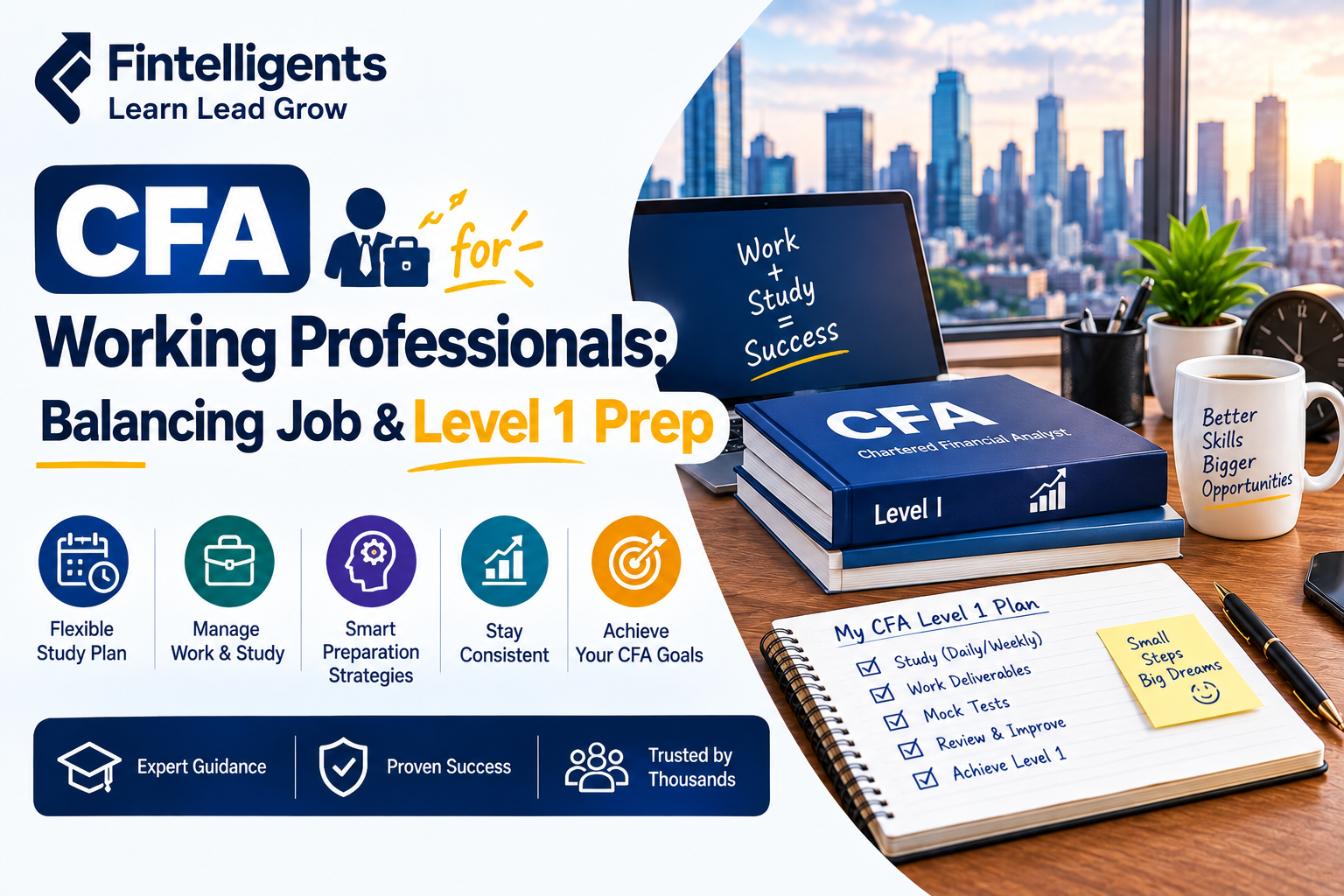
Studying for the CFA exam while working full-time feels like running two marathons at once. Your job demands focus all day. Then your evenings need to go toward reading, practice questions, and formula reviews. Many candidates ask the same question: is it even possible to clear Level 1 without quitting your job?
The answer is yes. Thousands of working professionals pass CFA Level 1 every year without leaving their careers. They do it with structure, discipline, and smart time management. This guide walks you through a realistic plan to balance your job and CFA Level 1 prep, step by step.
Why CFA for Working Professionals Is Different
Full-time students can dedicate entire days to CFA prep. Working professionals cannot. Your day already includes meetings, deadlines, and client calls. CFA prep has to fit into the gaps.
This changes how you approach the exam. You need efficiency over volume. You need consistency over long, occasional study marathons. A working candidate who studies one focused hour daily often beats a student who studies five hours only on weekends.
Your advantage is real-world context. Many CFA topics, like corporate finance or fixed income, connect directly to daily work tasks. This makes concepts easier to remember. Use that advantage instead of ignoring it.
Working professionals also bring stronger discipline from years of managing deadlines. This discipline transfers well into exam prep. You already know how to plan around a busy calendar, so apply that same skill to your study routine.
Another difference is financial pressure. Working candidates often self-fund their CFA journey. This creates strong motivation to pass on the first attempt. Use this motivation to stay consistent instead of letting it turn into stress.
Understanding the CFA Level 1 Exam Structure
Before building a study plan, know what you are preparing for. CFA Level 1 tests ten topic areas. These include ethics, quantitative methods, economics, financial statement analysis, corporate issuers, equity investments, fixed income, derivatives, alternative investments, and portfolio management.
The exam uses multiple-choice questions across two sessions. Each session runs for a set number of hours. CFA Institute updates weightings periodically, so always check the current curriculum guide before planning your study hours.
Ethics carries heavy weight and appears throughout the exam. Working professionals often underestimate this topic. Do not make that mistake. Strong ethics scores can protect your overall result.
The exam also uses a pass or fail format rather than a percentage grade. This means you do not need perfect scores in every topic. You need a solid, consistent performance across all ten subject areas.
Understanding this structure early helps you plan smarter. You can allocate more hours to heavily weighted topics without ignoring the smaller ones completely. Balance matters more than perfection in any single area.
How Many Hours Do Working Professionals Actually Need?

CFA Institute suggests candidates study around 300 hours for Level 1. Working professionals often need slightly more time. Fatigue, interruptions, and job stress slow down learning speed.
A realistic range is 300 to 400 hours spread across four to six months. This works out to roughly 15 to 20 hours per week. That sounds like a lot, but it breaks down into manageable daily chunks.
Instead of thinking in total hours, think in daily targets. One hour on weekdays and three hours on weekends adds up to 11 hours weekly. Over five months, that reaches more than 200 hours. Add a slightly higher weekend load, and you comfortably hit 350 hours.
Your actual number depends on your background. Candidates with finance degrees may need fewer hours for accounting or corporate finance topics. Candidates from engineering or non-finance fields may need extra time for quantitative methods and financial statement analysis.
Track your hours weekly instead of guessing. A simple log tells you if you are on pace or falling behind. Adjust your weekly targets every few weeks based on this data, not on assumptions.
Building a Weekly Study Schedule Around Your Job
A schedule only works if it matches your real life. Look at your calendar first. Identify fixed commitments like work hours, commute time, and family responsibilities.
Block out study time like you would block a client meeting. Treat it as non-negotiable. This mental shift matters more than any study technique.
Here is a simple weekly structure for working professionals:
- Monday to Friday: One hour before work or after dinner
- Saturday: Three to four hours, split into two sessions
- Sunday: Two to three hours, focused on weak areas and review
This structure gives you around 15 hours weekly. Adjust the hours based on your energy levels and job demands.
Weekday Micro-Sessions
Weekday study does not need long sessions. Thirty minutes in the morning and thirty minutes at night still add up. Use commute time for audio reviews or flashcards if you travel by public transport.
Micro-sessions keep concepts fresh. They also prevent burnout, since you never study for hours after a tiring workday.
Keep a small notebook or app for quick doubts during the day. Write down questions that pop up during meetings or commutes. Review them during your next study session instead of losing that thought completely.
Lunch breaks can also work as short study windows. Even fifteen minutes of flashcard review during lunch adds up over a week. Small pockets of time matter more than most candidates realize.
Weekend Deep-Work Blocks
Weekends are for deep, focused study. Turn off notifications. Choose a quiet space. Use weekends for practice questions, mock tests, and topics that need full concentration, like derivatives or quantitative methods.
Split your weekend hours into two or three sessions instead of one long block. A four-hour session in one sitting often leads to fading focus after the second hour. Two two-hour blocks with a break in between produce better retention.
Use one weekend session purely for review. Go back to notes from earlier in the week. This spaced repetition strengthens memory far better than only moving forward through new material.
Best Times of Day to Study CFA Level 1

Everyone has a different peak energy window. Some professionals think clearly early in the morning. Others focus better late at night.
Test both options during your first two weeks of prep. Track how much you retain in each session. Stick with whichever time gives better results, not whichever time feels more convenient.
Early morning study often works well because your mind is fresh and distractions are low. Late-night study works for people whose jobs end late or who feel mentally sluggish in the morning.
Avoid studying immediately after a stressful meeting or long call. Give yourself ten minutes to reset before opening your books. Jumping straight from work stress into study often reduces focus and wastes time.
Lunch-hour study can also work for candidates with flexible breaks. A quiet corner and thirty focused minutes can cover a full set of practice questions. Experiment across a few weeks to find your best combination of time slots.
Prioritizing Topics When Time Is Limited
Not all topics deserve equal time. Focus your limited hours where they matter most.
Ethics, financial reporting and analysis, and quantitative methods together make up a large share of the exam. Master these first. Once you feel confident, move to equity, fixed income, and corporate issuers.
Alternative investments and derivatives carry lower weight. Study them, but do not let them consume time meant for higher-weight topics.
Use the 80/20 Rule
Roughly 20% of topics generate 80% of your score improvement. Identify which topics repeatedly appear in practice tests. Spend extra time there instead of spreading effort equally across all ten subjects.
Review your practice test scores by topic every two weeks. This shows exactly where you are losing marks. Redirect your next study block toward those weak spots instead of topics you already understand well.
Avoid the trap of only studying subjects you enjoy. Many candidates spend extra hours on comfortable topics and avoid harder ones. This feels productive but weakens your overall score. Face the difficult topics early while you still have time to recover.
Common Mistakes Working Candidates Make
Many working professionals repeat the same errors during CFA prep. Avoiding these mistakes saves significant time and stress.
- Starting too late and compressing months of study into weeks
- Ignoring ethics until the final month
- Watching video lectures without doing practice questions
- Studying only on weekends and skipping weekdays entirely
- Skipping mock exams due to lack of confidence
- Not tracking progress against a real study plan
Each of these mistakes increases stress closer to the exam date. Fix them early, and your prep becomes far smoother.
Another common mistake is comparing your progress to other candidates online. Every working professional has different job demands and available hours. Focus on your own plan instead of matching someone else’s pace.
Overloading on notes without active recall is also a frequent error. Highlighting text feels productive but rarely builds real memory. Practice questions and self-testing build stronger recall than passive reading.
Tools and Resources That Save Time
Working professionals need efficient tools, not just more content. The right resources cut hours off your prep time without cutting quality.
- Official CFA Institute curriculum and mock exams
- Question banks with detailed explanations
- Formula sheets for quick daily review
- Mobile apps for flashcards during commutes
- Study group chats for quick doubt resolution
Choose one primary study provider instead of jumping between multiple sources. Switching resources constantly wastes time and creates confusion.
Calendar apps with reminders help protect your study blocks from work interruptions. Set recurring reminders for each session so study time becomes a fixed habit, similar to a recurring work meeting.
Podcasts covering CFA topics can also help during commutes or workouts. They will not replace deep study, but they reinforce concepts you already learned. Passive listening works best as a supplement, not a primary method.
How to Stay Motivated During Long Study Months
Motivation naturally dips during a five or six-month prep journey. Working professionals face extra pressure from job deadlines, travel, and personal responsibilities.
Break your journey into smaller milestones. Celebrate finishing each topic instead of waiting until the entire syllabus is done. Small wins keep momentum alive.
Track your study hours visually. A simple spreadsheet or app showing weekly progress creates a sense of accomplishment. Seeing consistent progress reduces anxiety about the exam date.
Connect with other working candidates. Online communities and study groups remind you that others share the same struggle. This reduces isolation during tough weeks.
Reward yourself after major milestones. Finishing a difficult topic like fixed income or derivatives deserves a small reward. This could be a favorite meal, a short break, or time with family.
Remind yourself why you started the CFA journey. Whether it is career growth, a promotion, or a salary increase, keep that goal visible. Write it down and place it somewhere you see daily, like your desk or phone lock screen.
Talking to Your Employer About Your CFA Goals
Some working professionals hesitate to mention CFA prep at work. This hesitation is unnecessary in most cases. Many employers value CFA candidates and support their goals.
Consider informing your manager, especially close to exam dates. Some companies offer study leave or flexible hours during exam weeks. Even without formal support, managers who know about your goals may reduce last-minute urgent tasks during your final prep weeks.
Keep the conversation professional. Explain how the CFA program strengthens your skills and benefits your role. This framing shows initiative rather than distraction from work.
Timing this conversation matters. Bring it up during a calm period, not during a high-pressure project. Managers respond better to planned conversations than last-minute requests for time off before an exam.
Some companies also offer reimbursement for exam fees or study materials. Ask your HR department about available benefits. Many professionals miss out on this support simply because they never asked.
Sample 6-Month Study Plan for Busy Professionals
A structured plan removes guesswork. Here is a sample roadmap for CFA Level 1 preparation over six months.
Month 1: Ethics and Quantitative Methods Month 2: Economics and Financial Statement Analysis Month 3: Corporate Issuers and Equity Investments Month 4: Fixed Income and Derivatives Month 5: Alternative Investments, Portfolio Management, and full review Month 6: Mock exams, weak-area revision, and final ethics review
Adjust this plan based on your comfort level with each subject. Candidates from finance backgrounds may move faster through corporate issuers or equity investments. Candidates from non-finance backgrounds may need extra weeks for quantitative methods.
Add a buffer week between months if your job has seasonal busy periods. Many professionals face heavier workloads during quarter-end or year-end closing periods. Planning around these known busy times prevents last-minute panic.
Revisit this plan every four weeks. Life changes, work travel happens, and unexpected tasks appear. A flexible plan that adjusts monthly works better than a rigid one that breaks under pressure.
Final Weeks Before the Exam: What Changes
The final four weeks require a shift in strategy. Stop learning new content in the last two weeks. Focus entirely on revision, mock exams, and error analysis.
Take at least three full-length mock exams under timed conditions. Review every wrong answer carefully. Understand why you made each mistake, not just what the correct answer is.
Reduce work-related stress where possible during this period. Communicate with your manager about lighter workloads if your company allows it. Sleep and mental clarity matter more in these final weeks than additional study hours.
On exam day, trust your preparation. Working professionals who follow a consistent plan usually perform better than they expect, simply because consistency builds real retention over months.
Prepare practical exam-day details in advance. Confirm your exam center location, required documents, and reporting time. Small logistical mistakes on exam day create unnecessary stress that hurts performance.
Get a full night of sleep before the exam instead of last-minute cramming. A tired brain performs worse than a rested one, even with extra hours of review. Treat sleep as part of your study strategy, not a separate concern.
Frequently Asked Questions
Yes. Thousands of working professionals pass every exam cycle. Success depends on consistent weekly study hours, not on quitting your job.
Most working candidates need 15 to 20 hours weekly across four to six months. This adds up to roughly 300 to 400 total hours.
Time management is the biggest challenge. Job demands, fatigue, and inconsistent schedules make daily study harder than for full-time students.
Many candidates benefit from telling their manager, especially close to exam dates. Some employers offer flexible hours or study leave during exam weeks.
Start at least four to six months before your exam date. Early starts allow smaller daily study sessions instead of last-minute cramming.
Ethics, financial statement analysis, and quantitative methods deserve top priority. These topics carry high weight and appear frequently throughout the exam.
It depends on personal energy levels. Test both options in the first two weeks and choose whichever time produces better focus and retention.
Some employers offer study leave close to the exam date. Ask your HR team early, since policies vary widely between companies.
Many candidates retake the exam and pass on a second attempt. Review your weak topics, adjust your study plan, and apply lessons from your first attempt.
Final Thoughts
Balancing a full-time job with CFA Level 1 prep is demanding, but it is far from impossible. Thousands of working professionals prove this every exam cycle. The difference between success and burnout usually comes down to planning, not talent.
Build a schedule that respects your job and your energy levels. Prioritize high-weight topics. Track your progress weekly. Protect your final weeks for revision instead of new content.
Your CFA charter will open doors long after the exam stress fades. Stay consistent, stay patient, and trust the process you build for yourself.