

Blog
RAI Certification in USA: Career Scope, Salary and Job

Companies in the United States now use AI in hiring, lending, insurance and healthcare. Regulators are watching closely. Customers want fair and safe systems. Because of this, employers need people who can prove they understand Responsible AI.
This is where RAI Certification in USA enters the picture. It gives you proof of skill in AI ethics, risk and governance. In this guide, you will learn what it is, what it pays and which jobs it opens. You will also get a clear plan to start.
Quick answer: RAI Certification in USA is a professional credential in Responsible AI. It shows you can manage fairness, transparency, privacy, security and accountability in AI systems. It suits analysts, risk managers, auditors, lawyers, data scientists and finance professionals.
RAI Meaning: Responsible Artificial Intelligence
RAI stands for Responsible Artificial Intelligence. It is a set of practices that keep AI safe, fair and accountable. A certification in this field tests whether you can apply those practices at work
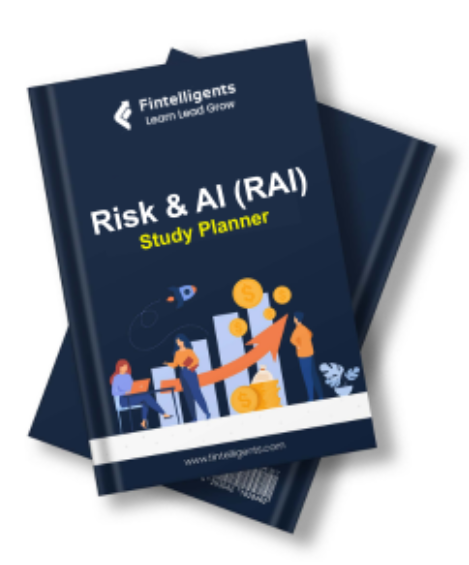
Want a clear plan before you spend money on any course? Get our free RAI Career Roadmap Checklist. It includes a provider comparison sheet, an eight-week study planner and a resume keyword list. Use the sign-up form on Fintelligents.com to receive it by email.
Take the first step today. Your future employer is already looking for Responsible AI talent.
What the Certification Covers
Most Responsible AI programs teach the same core areas. They cover the following topics:
- Fairness and bias testing
- Transparency and explainability
- Data privacy and consent
- Security and model robustness
- Human oversight and accountability
- AI risk assessment and documentation
How It Works in the US Market
The US has no single AI law. Instead, you see a mix of federal guidance, state rules and industry standards. Employers therefore want staff who understand frameworks such as the NIST AI Risk Management Framework. They also want people who can map AI use to privacy, consumer protection and sector rules.
Note: Several providers offer Responsible AI credentials. Content and cost differ by provider. Always check the syllabus, exam format and employer recognition before you enrol.
Why Responsible AI Skills Matter Now
AI Is Moving Into High-Stakes Decisions
AI now supports credit scoring, fraud checks, resume screening and medical triage. A wrong output can harm real people. As a result, companies face legal, financial and reputation risk.
Regulation Keeps Growing
State and federal bodies continue to issue AI rules and guidance. Global rules also affect US firms that serve customers abroad. Therefore, compliance teams need trained AI governance staff.
Trust Drives Revenue
Buyers prefer vendors who can show safe AI practices. Clear governance shortens sales cycles. It also lowers audit friction.
Talent Is Still Scarce
Many firms have data scientists. Few have people who can govern AI across teams. This gap creates strong demand for certified professionals.
Career Scope of RAI Certification in USA
Demand Across Industries
Responsible AI roles appear in many sectors. The strongest demand comes from the following areas:
- Banking, lending and fintech
- Insurance and risk management
- Healthcare and life sciences
- Technology and SaaS
- Consulting and Big Four firms
- Government and public sector
- Retail and HR technology
Growth Outlook
AI adoption keeps rising. Governance needs rise with it. Hence, Responsible AI is a durable career path rather than a short trend.
Career Path Example
A typical path looks like this:
- Analyst or auditor with data exposure
- AI risk or governance associate
- Responsible AI specialist
- AI governance manager
- Head of AI risk or Chief AI Ethics Officer
Each step adds scope, pay and influence.
RAI Certification Salary in the USA
Typical Salary Ranges
Pay depends on role, city, industry and experience. The figures below are broad estimates. Treat them as a guide, not a promise.
| Role Level | Typical Annual Range (USD) |
| Entry-level AI governance or risk analyst | $70,000 – $100,000 |
| Mid-level Responsible AI specialist | $100,000 – $145,000 |
| Senior AI governance or risk manager | $140,000 – $190,000 |
| Director or head of AI risk | $180,000 – $250,000+ |
What Raises Your Pay
Several factors push salary higher:
- Work in finance, healthcare or big tech
- Hands-on audit or model risk experience
- Knowledge of privacy and security rules
- Strong communication with legal and technical teams
- Location in hubs such as New York, San Francisco, Seattle or Washington DC
Does the Certificate Alone Raise Salary?
Not by itself. However, it supports your case in interviews and promotions. It also helps you switch fields faster. Pair it with real project proof for the best result.
Top Job Roles After RAI Certification
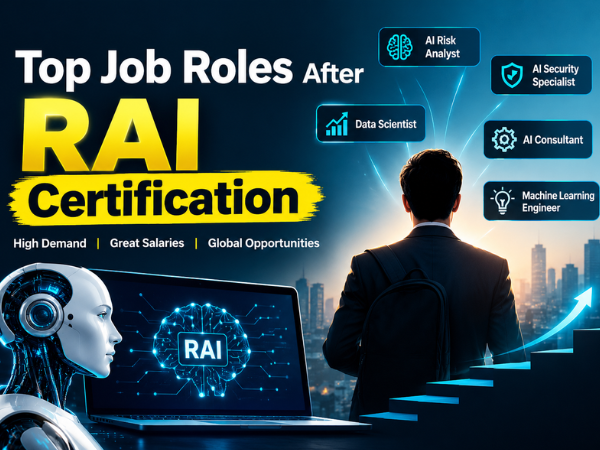
Responsible AI Specialist
This role reviews AI projects for bias, privacy and safety. You build checklists and guide product teams.
AI Governance Analyst
You maintain policies, model inventories and approval workflows. You also prepare evidence for audits.
AI Risk Manager
You assess model risk and set controls. This role suits those with a background in FRM, audit or credit risk.
AI Compliance Officer
You map AI use to laws and internal rules. You also train staff and report to leadership.
AI Ethics Consultant
You advise clients on safe AI adoption. Consulting firms hire for this role often.
Model Validation Analyst
You test models for accuracy, stability and fairness. Banks and insurers hire for this role at scale.
AI Product Manager (Responsible AI)
You shape products with safety built in. You balance user needs, speed and risk.
Who Should Take This Certification?
Best-Fit Professionals
This credential suits many backgrounds:
- Risk, compliance and audit professionals
- FRM, CFA and CPA holders moving toward AI risk
- Data scientists and ML engineers
- Lawyers and privacy professionals
- Product and project managers
- Students planning a career in AI policy
Do You Need to Code?
Not always. Governance roles need strong reasoning and documentation skills. Basic AI literacy helps. Coding skill helps technical roles such as model testing.
Skills You Will Build
Technical Skills
- Bias and fairness testing
- Model documentation and explainability
- Data quality and privacy controls
- Security and misuse awareness
Governance Skills
- AI policy writing
- Risk scoring and control design
- Audit evidence and reporting
- Regulatory mapping
Soft Skills
- Clear communication with non-technical leaders
- Stakeholder negotiation
- Critical thinking under uncertainty
How to Get RAI Certified: Step-by-Step
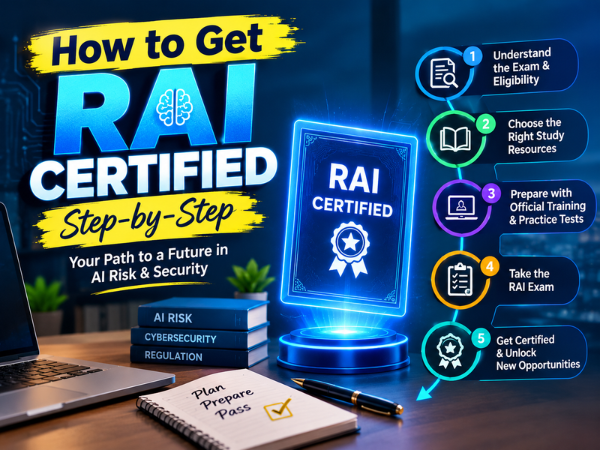
Step 1: Define Your Goal
Decide which role you want. A risk manager needs different depth than a data scientist. Your goal guides your provider choice.
Step 2: Compare Providers
Check the syllabus, exam type, cost and renewal rules. Look at how many job postings mention the credential. Read candidate reviews as well.
Step 3: Build Your Foundation
Learn core AI concepts first. Understand machine learning, generative AI and basic statistics. Then study ethics, privacy and risk frameworks.
Step 4: Follow a Study Plan
A simple eight-week plan works well:
- Weeks 1–2: AI basics and key terms
- Weeks 3–4: Fairness, privacy and security
- Weeks 5–6: Risk frameworks and governance
- Week 7: Case studies and practice questions
- Week 8: Mock exam and revision
Step 5: Practice With Real Cases
Review a real AI use case, such as a loan model. List risks, controls and owners. Write a one-page summary. This becomes a portfolio piece.
Step 6: Take the Exam
Book your slot after your mock scores are steady. Rest well before the test.
Step 7: Showcase Your Credential
Add it to your resume and LinkedIn. Share one project in your profile. Mention measurable results in interviews.
RAI Certification vs Other AI Credentials
Quick Comparison
| Factor | RAI Certification | General AI/ML Certificate | Cloud AI Certificate |
| Main focus | Ethics, risk, governance | Model building | Tool and platform use |
| Best for | Risk, compliance, policy | Engineers, analysts | Cloud engineers |
| Coding needed | Low to medium | High | Medium to high |
| Career edge | Governance roles | Technical roles | Platform roles |
Which Should You Choose?
Choose RAI if you want governance, risk or policy work. Choose a technical credential if you want to build models. Many professionals take both over time.
RAI Certification for Finance and Risk Professionals
Why Finance Fits Well
Banks and insurers already run strict model risk programs. AI adds new risks such as bias, drift and opaque outputs. Finance professionals understand controls, so they adapt quickly.
How FRM and CFA Holders Benefit
An FRM holder knows market, credit and operational risk. Adding Responsible AI lets you cover model risk in AI-driven decisions. A CFA charterholder can evaluate AI-led investment tools with more confidence.
Example Use Cases in Finance
- Credit scoring fairness reviews
- Fraud model monitoring
- Chatbot compliance checks
- Algorithmic trading oversight
- Customer data privacy controls
Common Mistakes to Avoid
Choosing a Provider Only on Price
Cheap courses may lack depth or recognition. Always check the syllabus and employer demand.
Skipping Hands-On Practice
Theory alone will not impress interviewers. Build at least one case study.
Ignoring Soft Skills
Governance work needs clear writing and calm communication. Practise both.
Expecting Instant Salary Jumps
The credential helps, but results come from skill plus experience. Plan for steady growth.
Is RAI Certification Worth It?
Reasons It Pays Off
- Demand for AI governance keeps rising
- It differentiates your resume
- It supports career switches
- It builds long-term, future-proof skills
When It May Not Fit
If you want pure model research, a technical degree may serve you better. If your employer does not use AI, the value will be lower in the short term.
Our Verdict
For risk, compliance, audit and finance professionals, the answer is usually yes. The skills are practical and the demand is real.
Free Resource for Fintelligents Readers
Want a clear plan before you spend money on any course? Get our free RAI Career Roadmap Checklist. It includes a provider comparison sheet, an eight-week study planner and a resume keyword list. Use the sign-up form on Fintelligents.com to receive it by email.
Frequently Asked Questions
RAI Certification in USA is a Responsible AI credential. It proves you can manage fairness, privacy, security and accountability in AI systems. It is useful for risk, compliance, audit and data roles.
Yes, for most governance and risk professionals. AI regulation and adoption keep growing. Employers want staff who can show proven skills.
Entry roles often start near $70,000 to $100,000. Senior managers can earn $140,000 to $190,000. Directors may earn more. Pay varies by city, sector and experience.
No. Many governance roles need little or no coding. Basic AI knowledge is enough for most learners. Technical roles may need more skill.
Most learners need six to ten weeks. This depends on your background and study hours. A steady weekly routine works best.
Popular roles include Responsible AI specialist, AI governance analyst, AI risk manager, AI compliance officer and model validation analyst.
Yes. FRM, CFA and audit professionals fit well. Banks and insurers need people who understand both risk and AI.
It depends on your goal. RAI suits governance, risk and policy careers. A general AI certificate suits model-building careers.
Yes. Many governance and consulting roles offer remote or hybrid work. Strong documentation skills help here.
List your target role first. Then compare providers and build a short study plan. Our free roadmap on Fintelligents can guide each step.
Final Thoughts and Next Step
RAI Certification in USA is a smart move for professionals who want a safe, growing career. It blends ethics, risk and technology. Moreover, it fits well with finance and audit backgrounds.
Start small. Pick a role, compare providers and follow a clear plan. Then build one real case study to prove your skill.
Contact Immediately and Build Your Future with Fintelligents
Subscribe to our newsletter for weekly certification tips.
Contact us through the Fintelligents contact form for a free 15-minute career guidance call.