Blog
CFA 2027 Curriculum Changes: What’s New in Level 1, 2 and 3 and How It Affects Your Prep

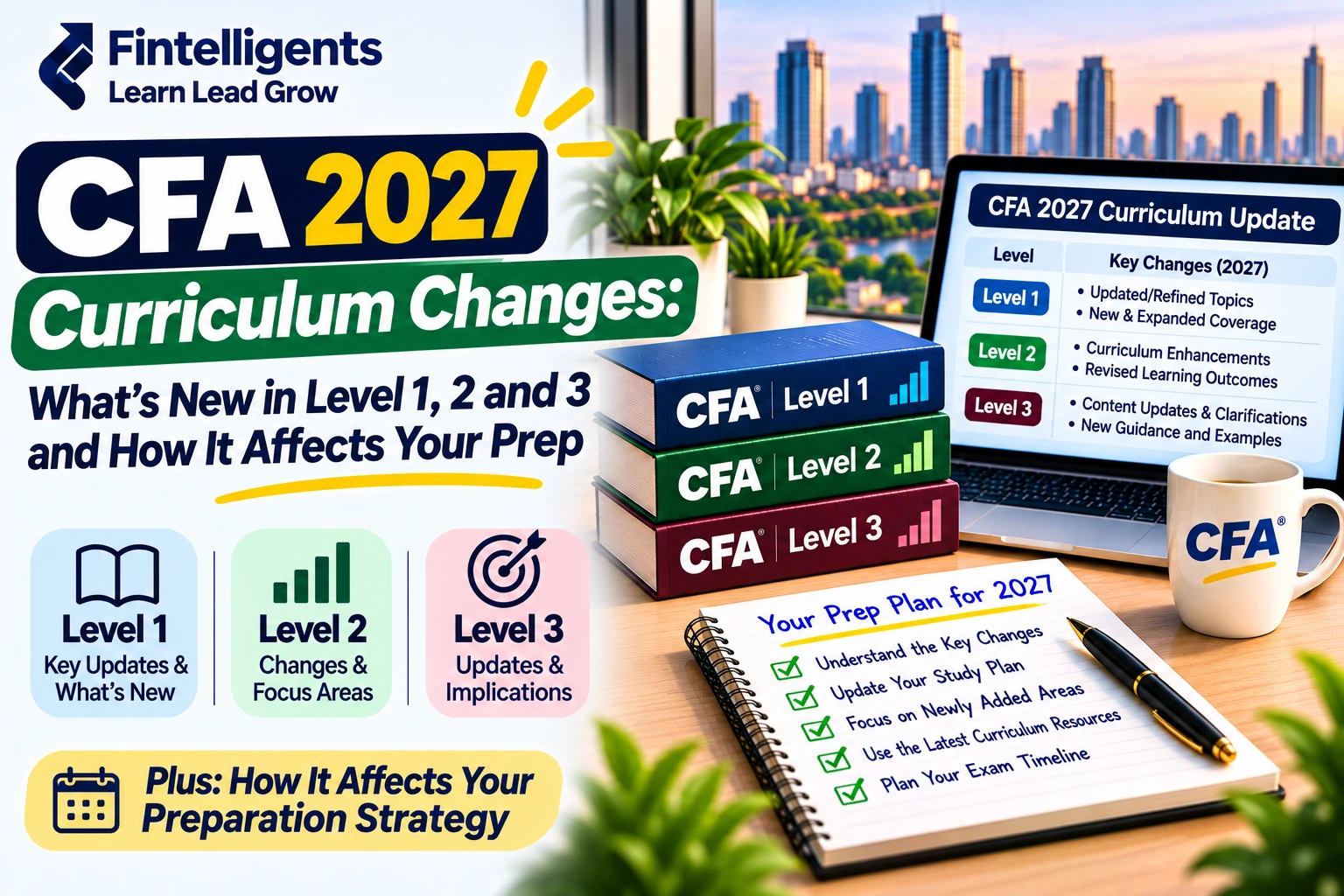
The CFA Institute updates its curriculum annually and 2027 brings changes across all three levels. For candidates preparing for a 2027 sitting, understanding exactly what has changed – and what has not – is essential before you finalise your study plan. Using outdated materials from a prior year is one of the most avoidable ways to lose marks on the exam.
This guide covers the key CFA 2027 curriculum changes at Level 1, Level 2, and Level 3, and explains what each change means for how you should prepare.
Why the CFA Curriculum Changes Every Year
The CFA Institute revises the curriculum each year to reflect developments in investment practice, evolving regulatory environments, and feedback from practitioners on what knowledge is most relevant to the current work of an investment professional. Changes range from minor topic realignments within existing readings to the addition of entirely new topics or the removal of content deemed less relevant to current practice.
The pace of change has accelerated in recent years as the investment industry has evolved around artificial intelligence, ESG integration, digital assets, and private markets. Each of these areas has seen increasing weight in the CFA curriculum over the last two to three years.
CFA Level 1 2027 Curriculum Changes
Financial Statement Analysis
The FSA section in 2027 continues the multi-year shift toward IFRS 17 (insurance contracts) and IFRS 16 (leases) applications. Candidates who studied in 2025 or early 2026 should check whether their materials have been updated to reflect the most recent IFRS applications.
Quantitative Methods
Python continues to gain prominence in the quantitative methods topic area. The 2027 curriculum includes expanded content on the application of Python for data analysis in investment contexts. Candidates are not expected to code from scratch in the exam, but familiarity with what Python-based analysis outputs mean is now examinable.
Alternative Investments
The alternative investments section at Level 1 has expanded its treatment of private markets, including private credit and infrastructure as distinct investable asset classes. Direct indexing and interval funds have also been added as topics.
CFA Level 2 2027 Curriculum Changes
Equity Valuation
The equity valuation section at Level 2 has introduced additional content on relative valuation in sectors with negative earnings, which affects how P/E alternatives like EV/EBITDA and EV/Revenue are tested. This is a frequent area of exam questions and the 2027 update adds nuance that prior-year materials may not cover.
Fixed Income
The fixed income topic area at Level 2 continues to evolve around the interest rate environment of the last few years. Spread analysis, credit risk modelling, and the interplay between duration and convexity under volatile rate conditions have all been updated. Candidates using 2025 materials should verify these sections specifically.
ESG Integration
ESG has been elevated further in the Level 2 curriculum. The 2027 version places greater emphasis on integrating ESG factors into equity valuation models and fixed income credit analysis rather than treating ESG as a standalone topic.
CFA Level 3 2027 Curriculum Changes
Portfolio Management
Level 3 in 2027 places greater emphasis on alternatives within the portfolio context, including how to evaluate and size allocations to private equity, private credit, and real assets within institutional and high net worth mandates. This builds on the Level 1 and Level 2 alternatives content in a portfolio application context.
Behavioural Finance
The behavioural finance section at Level 3 has been revised to place more emphasis on identifying behavioural biases in clients and constructing practical approaches to managing them in a portfolio context, rather than simply identifying and labelling them.
Technology and AI in Investment Management
The 2027 Level 3 curriculum introduces expanded content on how artificial intelligence tools are being integrated into portfolio management processes, including algorithm-driven rebalancing, natural language processing for research, and AI-assisted risk management.
What These Changes Mean for Your Preparation
Always Use Current-Year Materials
The single most important implication of annual curriculum changes is that you must use 2027-aligned materials for a 2027 exam. This is particularly important if you purchased study materials more than 12 months ago or are using materials passed on from someone who sat in 2025 or 2026.
Verify Your Question Bank Is 2027-Aligned
Third-party question banks are updated on a lag. Confirm that the question bank you are using covers the 2027 curriculum before you spend significant time on it.
Weight Your Revision by What Changed
If you are a repeat candidate who sat a 2026 exam, the safest approach is to treat the changed sections as new material and revise them first. The sections that have not changed are where your existing knowledge carries over most reliably.
For a view of how the evolving CFA curriculum connects to real career paths in investment management, From Analyst to AI Strategist: The Future of the CFA Career Path gives the broader career context.
For candidates choosing between the CFA and other certifications in light of the 2027 changes, CFA vs FRM vs CAIA: Which Certification Will Matter Most in 2026? is a useful reference.
Preparing with 2027-aligned materials and experienced faculty from the best CFA online course in India at Fintelligents ensures you are studying exactly what will be on your exam. The CFA Level 1 Study Plan: What to Prioritise in the Final 60 Days is a useful starting point for structuring your preparation. If fees are a consideration, the CFA need-based scholarship is worth exploring before you begin.
Frequently Asked Questions
Where can I find the official list of CFA 2027 curriculum changes?
The CFA Institute publishes a curriculum errata and changes summary on its website each year at cfainstitute.org. Registered candidates also receive notifications of curriculum updates through the candidate portal.
Do curriculum changes affect the exam structure or format?
No. The number of questions, the exam format, and the time allocation remain the same in 2027. Only the content of certain topic areas changes.
Is it safe to use 2026 CFA prep materials for a 2027 exam?
For the topic areas that have not changed, 2026 materials remain valid. For the areas that have changed – particularly Python in Quant, ESG at Level 2, and alternatives at Level 3 – you will need 2027 materials. The risk of using old materials is highest in those specific sections.
How much of the CFA curriculum changes year on year?
Typically, 10 to 20 percent of the curriculum content changes in any given year. Core topic areas like ethics, financial reporting, and portfolio theory are relatively stable, while technology, ESG, and alternatives see more frequent updates.
Does the CFA Institute offer a comparison document between the 2026 and 2027 curricula?
Yes. Registered candidates can access a comparison document through the candidate portal after registering for a 2027 sitting. It lists the specific readings and learning outcomes that have been added, changed, or removed.