Blog
CAIA Certification in Singapore: Why Alternative Investment Professionals Are Flocking to It in 2026

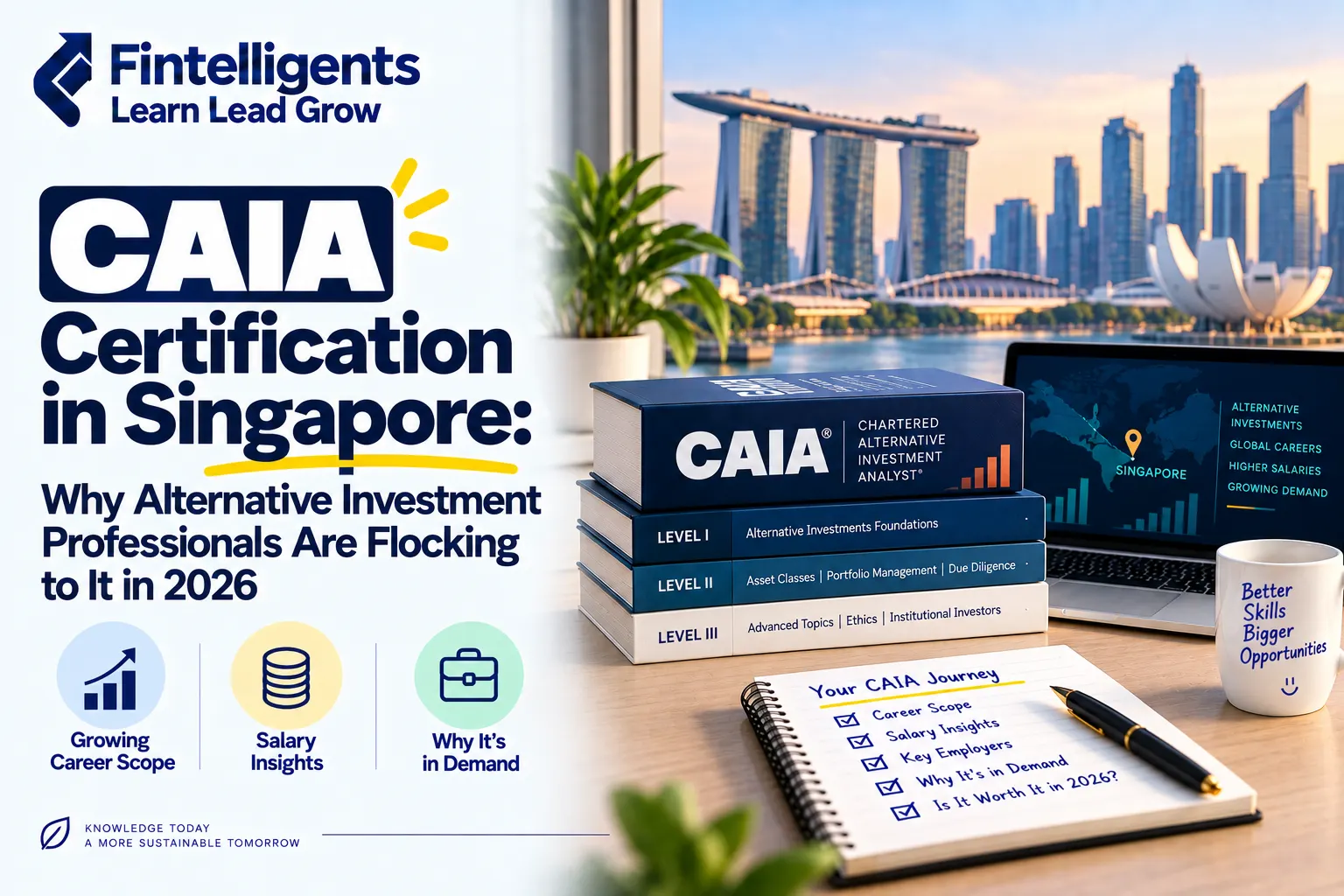
Singapore has quietly become one of the most important markets for alternative investment professionals in Asia Pacific. Family offices have multiplied, sovereign wealth vehicles like GIC and Temasek have expanded their alternatives allocations, and the private equity ecosystem around Southeast Asia has grown into one of the fastest-developing in the world. The CAIA certification has grown alongside this shift, and professionals across Singapore’s financial sector who work in or are targeting alternative roles are increasingly pursuing it as the credential that directly validates their expertise. This blog explains why the CAIA is gaining momentum in Singapore in 2026 and what it means for your career if you pursue it there.
What the CAIA Covers and Why It Fits Singapore
The CAIA, or Chartered Alternative Investment Analyst, covers hedge funds, private equity, private credit, real assets, infrastructure, digital assets, and portfolio management within the alternatives space across two exam levels. Level 1 builds the foundational knowledge of alternative asset classes. Level 2 focuses on portfolio construction, due diligence, manager selection, and risk management within alternatives-heavy portfolios.
Singapore’s investment ecosystem is dominated by exactly these asset classes. GIC, which manages Singapore’s foreign reserves, has significant allocations to private equity, real estate, and infrastructure globally. Temasek has a long history of private market investing and has been expanding its alternatives exposure. The family office sector in Singapore has grown dramatically, with the Monetary Authority of Singapore reporting that single-family offices in Singapore grew from around 700 in 2020 to over 1,400 by 2023, a number that has continued to rise. These family offices manage wealth across private equity, real estate, hedge funds, and other alternatives, creating a steady hiring demand for professionals who understand these asset classes deeply.
Book a Free CAIA Counselling Session at Fintelligents
The CAIA is built from what researchers describe as a Limited Partner and allocator perspective, covering fund selection and oversight rather than just investment execution. This makes it particularly well-suited for the kinds of roles that Singapore’s institutional allocators, family offices, and fund-of-funds managers fill.
The Singapore Alternative Investment Landscape in 2026
Several specific developments in Singapore’s financial sector have accelerated the relevance of the CAIA in 2026.
The Variable Capital Company structure introduced by MAS in 2020 has become the preferred vehicle for establishing investment funds in Singapore. Over 1,000 VCCs have been incorporated since launch and the structure supports a wide range of alternative strategies including hedge funds, private equity, and multi-asset funds. The growth of VCCs has expanded the operational and management infrastructure needed in Singapore around alternatives, creating roles that benefit directly from CAIA expertise.
MAS has also been building Singapore’s position as a leading green and sustainable finance hub in Asia, with increasing focus on sustainable alternatives including green infrastructure, transition finance, and ESG-aligned private equity. The CAIA Level 2 curriculum covers ESG integration in alternatives portfolios, which aligns with where Singapore’s alternatives market is heading.
The digital assets sector in Singapore has been significant for several years, with MAS licensing a growing number of Digital Payment Token service providers and the country hosting a concentration of crypto-adjacent investment activity. The CAIA curriculum added a dedicated Digital Assets module in recent years that covers cryptocurrencies, tokenised assets, and blockchain-based investment structures, making the curriculum more current for the Singapore market than it was even three years ago.
For a broader view of how the alternatives industry is evolving globally and what is changing in the CAIA curriculum to reflect it, Alternative Investments in 2026: What’s Changing in the CAIA Curriculum gives you the updated picture.
What CAIA Professionals Earn in Singapore
CAIA certification in Singapore is associated with salaries spanning SGD 48,000 at the most junior end to SGD 250,000 and above at the senior specialist level. In practice, the most meaningful salary outcomes for CAIA holders come at mid-career and senior level in specific roles.
Entry-level fund analysis and alternatives research roles in Singapore typically pay SGD 60,000 to SGD 90,000. Mid-career professionals in alternatives portfolio management, PE fund management, or hedge fund analysis with 4 to 8 years of experience earn SGD 100,000 to SGD 180,000. Senior investment professionals at family offices, sovereign wealth vehicles, and PE firms earn SGD 180,000 to SGD 280,000. At the most senior level, Partners and CIOs at PE firms and fund-of-funds earn well above SGD 300,000 with carried interest and performance bonuses adding significantly to total compensation.
The CAIA functions as a preferred credential and tiebreaker rather than a salary driver on its own in most hiring scenarios. It appears consistently across institutional distribution, consulting, and allocator roles, and rarely as a hard requirement. Roles that list CAIA tend to pay in line with other roles at the same seniority and sector, rather than commanding a premium specifically because of the CAIA mention. The real value of the credential is in clearing hiring screens and signalling that you can evaluate alternative strategies on their own terms, which matters most for roles where that judgement is central to the work.
Who Should Pursue CAIA in Singapore
The CAIA in Singapore is most directly relevant for investment professionals at GIC, Temasek, or their portfolio companies who are involved in alternatives allocation or oversight. It is relevant for professionals at Singapore family offices managing private equity, real estate, or hedge fund allocations. It is relevant for analysts and managers at PE firms, hedge funds, and real estate investment managers operating out of Singapore. It is also increasingly relevant for professionals in fund administration and prime brokerage roles where client portfolios are concentrated in alternative strategies.
For professionals new to Singapore or working at a global bank’s Singapore office who want to differentiate their profile for alternatives-facing roles, the CAIA is a more targeted credential than the CFA for this specific purpose. Major financial centres like New York, London, Singapore, and Hong Kong offer the most opportunities for CAIA holders, with Singapore standing out in Asia for the depth and diversity of its alternatives ecosystem.
For a broader comparison of CAIA against FRM before deciding which to pursue first, CAIA vs FRM 2026: Which Certification Pays More and Opens Better Doors in Finance? covers the comparison directly.
Enrolling in CAIA Certification in India coaching at Fintelligents gives you structured preparation for both CAIA levels with faculty support and mock practice, giving you the right foundation whether you are targeting Singapore’s alternatives market or building toward it from India. For candidates who are also considering the FRM alongside the CAIA for Singapore risk-adjacent roles, FRM Online Classes at Fintelligents covers both programs with structured preparation.
For a look at how the CAIA fits within Singapore’s growing alternatives ecosystem alongside other credentials, How Family Offices Are Using CAIA Talent to Manage Billion Dollar Portfolios gives you the institutional context.
Conclusion
Singapore is one of the strongest markets globally for CAIA certified professionals in 2026 and the gap between supply and demand is still wide enough that holding the credential provides a genuine differentiation advantage. The growth of family offices, VCCs, and MAS-backed sustainable alternatives has created sustained hiring demand for professionals with deep alternatives expertise. The CAIA directly validates that expertise in a way that no other credential does as specifically. For professionals in or targeting Singapore’s alternatives sector, 2026 is a strong time to pursue it.
Frequently Asked Questions (FAQs)
Q. Is the CAIA certification recognised by employers in Singapore?
Yes. The CAIA is a globally recognised credential and is actively valued by Singapore’s alternatives sector including family offices, sovereign wealth vehicles, PE firms, and hedge funds. MAS-regulated institutions and DIFC-based international asset managers that operate in Singapore are familiar with the CAIA and treat it as a relevant credential for alternatives-facing roles.
Q. What salary can CAIA holders expect in Singapore?
Salaries for CAIA holders in Singapore range from SGD 60,000 to SGD 90,000 at entry level in fund analysis roles to SGD 180,000 to SGD 280,000 for senior investment professionals at family offices and PE firms. Partners and CIOs at PE firms earn well above SGD 300,000 in total compensation including carried interest.
Q. Why is Singapore a strong market for CAIA professionals in 2026?
Singapore’s alternatives ecosystem has grown significantly through the expansion of family offices, Variable Capital Companies, GIC and Temasek’s private markets activity, and MAS’s push to make Singapore a sustainable finance hub. Each of these developments has created hiring demand for professionals with specialised alternatives expertise, which is exactly what the CAIA validates.
Q. Is the CAIA or the CFA better for a career in Singapore?
For investment management roles broadly, the CFA is the most universally recognised credential in Singapore. For roles specifically in private equity, hedge funds, family offices, and alternatives-focused positions, the CAIA is the more directly relevant credential. Many professionals in senior Singapore alternatives roles hold both.
Q. How long does it take to complete the CAIA?
The CAIA has two levels offered in March and September each year. Most candidates complete both levels within one year by sitting Level 1 in one window and Level 2 in the next. The CAIA Association recommends approximately 200 hours of preparation for Level 1 and 250 hours for Level 2.