Blog
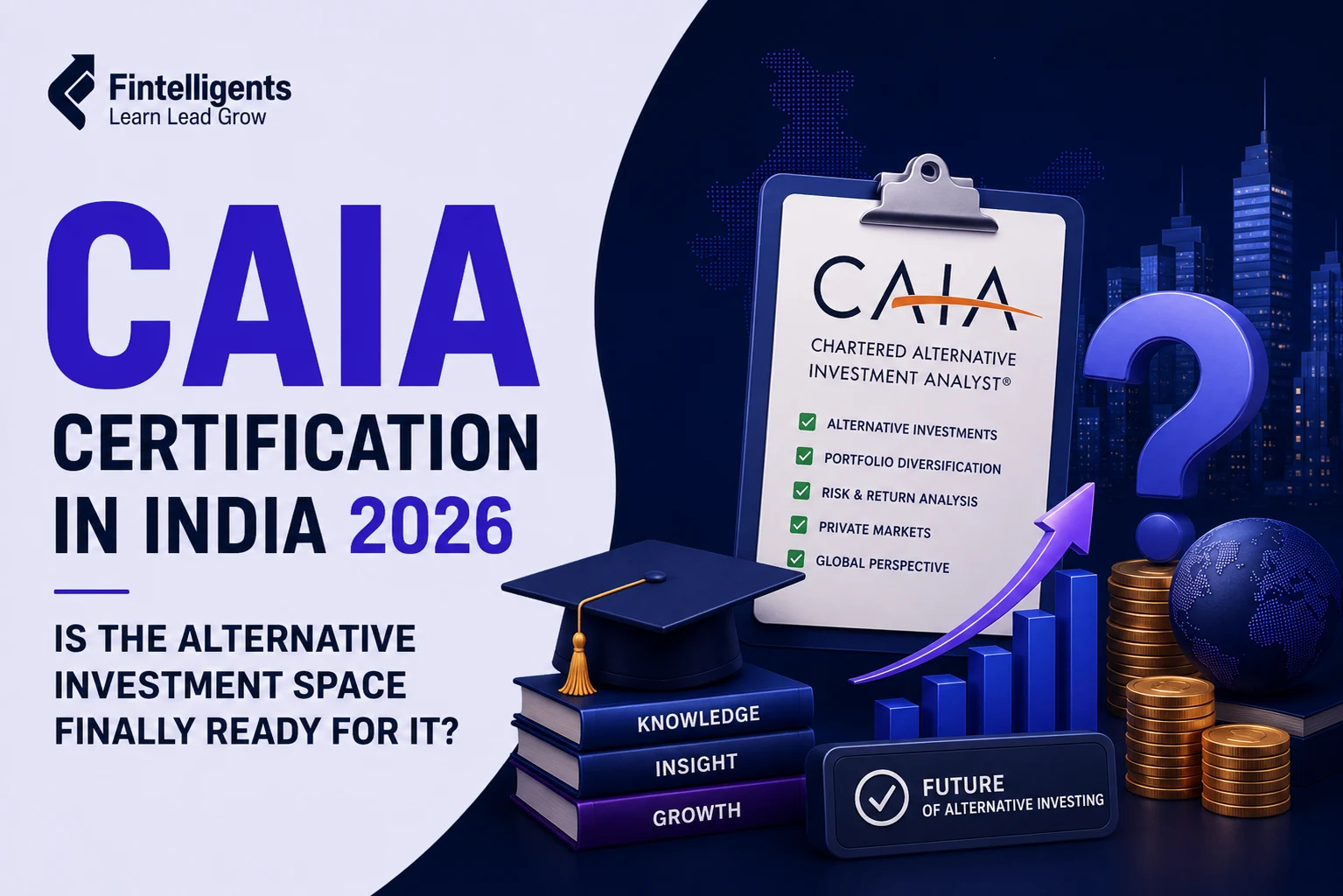
CAIA Certification in India 2026: Is the Alternative Investment Space Finally Ready for It?

The CAIA certification India 2026 story is playing out against a backdrop that is more favourable than it has ever been. India’s alternative investment industry has grown significantly over the last three years. AIF registrations have multiplied, family offices are proliferating, and institutional investors are increasing their allocations to private equity, real estate, and hedge fund strategies. The question is whether the Indian market has reached a point where the CAIA certification delivers the kind of career value in India that it has long delivered internationally. The honest answer is that it is getting there, and 2026 may be the year the momentum becomes undeniable.
What Is the CAIA Certification?
CAIA stands for Chartered Alternative Investment Analyst. The certification is awarded by the CAIA Association and is the only globally recognised credential specifically focused on alternative investments. It covers hedge funds, private equity, real assets, infrastructure, structured products, and portfolio management within the alternatives space across two exam levels.
The CAIA certification India 2026 is pursued by professionals who want to build deep expertise in alternative assets rather than the full breadth of investment management that a CFA covers. For those specifically in or targeting alternative investment roles, the depth the CAIA provides is more directly applicable than any other credential.
How the Indian Alternative Investment Space Has Changed
To understand whether the CAIA certification India 2026 makes sense, you need to look at what has happened to the Indian alternatives market.
AIF Growth
SEBI registered AIFs in India have grown dramatically. Category II AIFs covering private equity and debt funds and Category III AIFs covering hedge fund and long-short strategies have both seen significant growth in number and in assets under management. The professionals managing and supporting these vehicles need structured knowledge of alternative investment frameworks.
Family Office Expansion
India’s high net worth population has grown and family offices managing multi-generational wealth have proliferated. These offices increasingly allocate to alternative strategies and need professionals who understand how to evaluate, structure, and manage alternative investments at the portfolio level.
Institutional Allocation to Alternatives
Indian pension funds, insurance companies, and sovereign wealth adjacent vehicles have increased their allocations to alternative asset classes. This is driving demand for professionals who can conduct due diligence, manage risk, and oversee performance across private equity, real estate, and infrastructure investments.
| Segment | Growth Driver in India | CAIA Relevance |
| Category II and III AIFs | SEBI regulatory development and investor appetite | Direct: covers PE, hedge fund, debt strategies |
| Family Offices | High net worth wealth growth | Direct: covers portfolio construction and alternatives |
| Institutional Alternatives | Pension and insurance allocation shifts | Direct: covers due diligence and risk management |
| Real Estate Investment | REIT growth and private real estate | Direct: covers real assets |
| Infrastructure | Government push and private capital | Direct: covers infrastructure as an asset class |
For a look at how family offices specifically are using CAIA talent, How Family Offices Are Using CAIA Talent to Manage Billion Dollar Portfolios gives you a current picture.
Who Should Pursue CAIA Certification in India in 2026?
The CAIA certification India 2026 is most directly relevant for the following groups.
AIF and PMS professionals who work within India’s growing alternative fund ecosystem and need a structured framework for the asset classes and strategies they manage daily.
Family office professionals managing alternative allocations across private equity, real estate, and hedge fund strategies for high net worth clients.
Investment bankers and analysts who work on private equity deal structuring, debt syndication, or infrastructure transactions and want a credential that validates their alternatives expertise.
Fresh graduates targeting careers in private equity, venture capital, or hedge fund analysis can use the CAIA certification as a differentiator in a competitive market for roles that receive far more applications than they have positions.
Risk professionals at banks and financial institutions who oversee alternative investment portfolio exposures will find the CAIA curriculum directly applicable to their work.
For a view of how the curriculum itself is evolving to reflect the current alternatives landscape, Alternative Investments in 2026: What’s Changing in the CAIA Curriculum covers the latest updates relevant to candidates preparing this year.
CAIA vs CFA for Alternative Investment Roles in India
| Factor | CAIA | CFA |
| Focus | Deep alternatives expertise | Broad investment management |
| Best for | PE, hedge fund, real assets, AIF roles | Equity research, portfolio management, wealth management |
| Exam structure | Two levels | Three levels |
| Time to complete | 1 to 2 years | 3 to 5 years |
| International recognition | Strong in alternatives circles | Broad across all investment roles |
| India market relevance | Growing fast in 2026 | Established and strong |
For professionals specifically targeting alternative investment roles in India, the CAIA is the more targeted and time efficient credential. For those who want broader investment management recognition across more role types, the CFA covers more ground.
Enrolling in CAIA Certification in India coaching at Fintelligents gives you structured preparation for both CAIA levels with faculty who understand the Indian alternatives market context and the specific exam requirements at each level.
For a look at how the role of the CAIA credential is evolving in the broader 2026 investment landscape, CAIA’s Role in 2026 Investment Landscape gives you useful strategic context before you decide.
Conclusion
The CAIA certification India 2026 is at an inflection point. The market conditions that make the credential valuable, a growing AIF ecosystem, expanding family offices, and increasing institutional alternatives allocations, have developed enough that the certification is beginning to deliver the career value in India that it has long delivered internationally. For professionals already in or targeting alternative investment roles, 2026 is a good year to pursue it. The early mover advantage in a market that is still building its CAIA-credentialed professional base is real and it will not last indefinitely as the market matures.
Enroll for your CAIA coaching at Fintelligents and build the credential that positions you ahead of the curve in India’s growing alternative investment market.
Ready to Start Your CAIA Journey?
If you’re considering building a career in alternative investments, now is a good time to start preparing for the CAIA certification. Our new CAIA batch starts on 4 October 2026, offering a structured learning path to help you understand the curriculum, strengthen your concepts, and prepare confidently for the CAIA exam. Start early, build a strong foundation, and take the next step toward developing your expertise in the growing alternative investment space.
Frequently Asked Questions
1. Is the CAIA certification recognised by employers in India in 2026?
Yes and recognition is growing. AIF managers, family offices, and institutional investors in India are increasingly familiar with the CAIA credential. Internationally it has been well recognised for years and Indian financial institutions with global operations treat it accordingly.
2. How long does it take to complete the CAIA certification in India?
Most candidates complete both CAIA levels within one year if they attempt them in consecutive exam windows. Each level requires approximately 200 hours of preparation.
3. Is the CAIA better than the CFA for alternative investment roles in India?
For roles specifically in private equity, hedge funds, real assets, or AIF management, the CAIA is the more directly relevant credential. The CFA covers broader investment management. Many professionals in senior alternatives roles eventually hold both but for those specifically targeting alternatives, CAIA is the more efficient starting point.