Blog
ACCA After Graduation: Course Duration, Total Papers and How Many Years It Takes

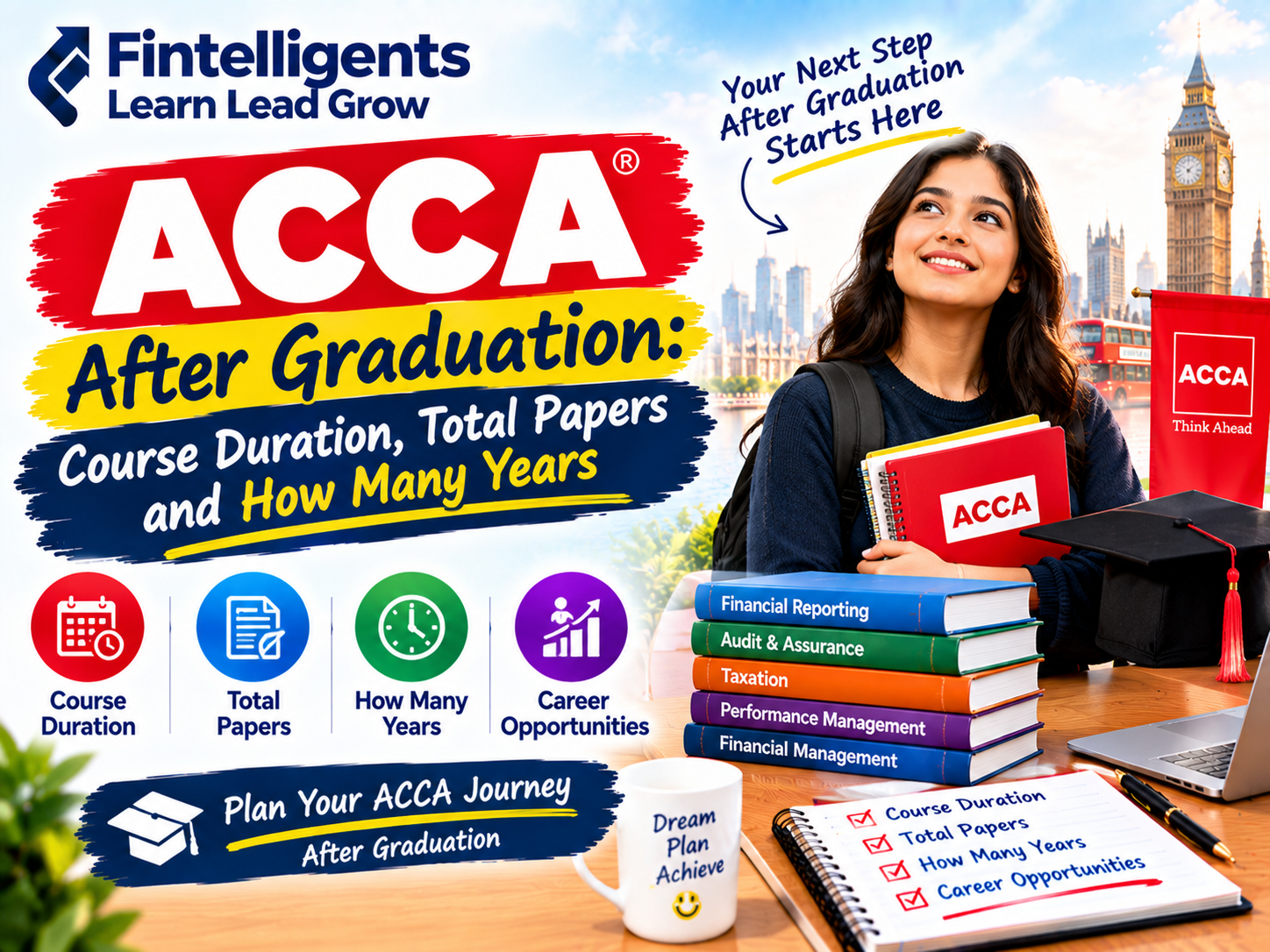
Quick Answer: ACCA course duration after graduation is usually 2 to 3.5 years. The full qualification has 13 exams. Many graduates receive exemptions, so they often sit fewer papers. You also need 36 months of approved work experience to become a member.
Many graduates ask the same question. How long does ACCA take after college? The answer depends on your degree, your exemptions and your study pace. This guide gives you a clear, practical timeline.
What Is the ACCA Course Duration After Graduation?
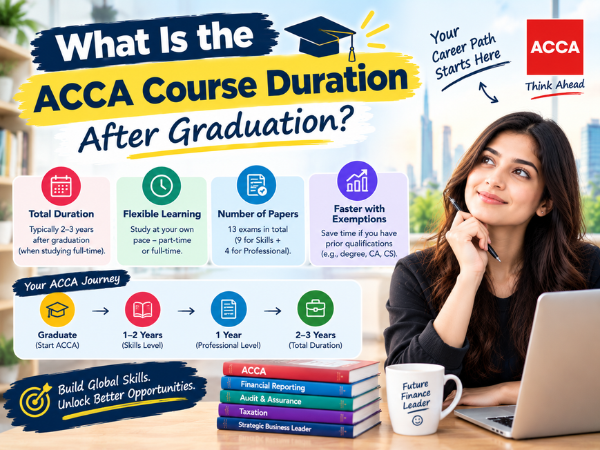
ACCA does not have a fixed duration. You set the pace. Still, most graduates finish the exams in about 2 to 3 years. With work experience added, the full journey takes around 3 to 4 years.
The Short Answer for Graduates
Here is the simple view. A graduate with strong exemptions can finish in 2 years. A graduate with fewer exemptions may need 3 to 3.5 years. A working professional may take 4 years or more.
Why the Duration Varies
Several factors change your timeline. Each one matters.
- Exemptions: More exemptions mean fewer exams.
- Study hours: Full-time students move faster than working students.
- Exam attempts: Re-sits add months to your plan.
- Paper difficulty: Some papers need more preparation time.
- Work experience: The practical requirement runs on its own clock.
Because of these factors, two graduates can have very different timelines. Therefore, plan your own path instead of copying someone else’s.
ACCA Course Structure: Total Papers Explained
ACCA has three levels. Together, they include 13 exams. In addition, you complete an ethics module and a practical experience requirement.
Level 1: Applied Knowledge (3 Papers)
This level builds your base. It covers accounting, business and management basics.
- Business and Technology (BT)
- Management Accounting (MA)
- Financial Accounting (FA)
Level 2: Applied Skills (6 Papers)
This level builds technical skill. It is the heaviest part of the course.
- Corporate and Business Law (LW)
- Performance Management (PM)
- Taxation (TX)
- Financial Reporting (FR)
- Audit and Assurance (AA)
- Financial Management (FM)
Level 3: Strategic Professional (4 Papers)
This level builds leadership and advanced judgment. You sit two essential papers and two option papers.
Essentials (both compulsory):
- Strategic Business Leader (SBL)
- Strategic Business Reporting (SBR)
Options (choose any two):
- Advanced Financial Management (AFM)
- Advanced Performance Management (APM)
- Advanced Taxation (ATX)
- Advanced Audit and Assurance (AAA)
Ethics and Professional Skills Module
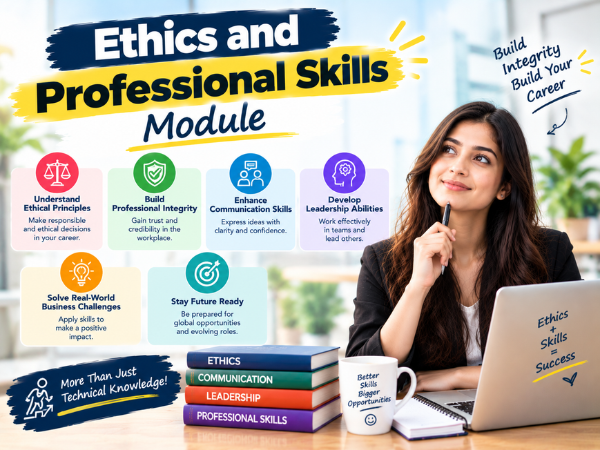
Alongside the exams, you complete an online ethics and professional skills module. It is not a traditional exam. However, you must finish it before you qualify.
ACCA Papers at a Glance
| Level | Papers | Number of Exams |
| Applied Knowledge | BT, MA, FA | 3 |
| Applied Skills | LW, PM, TX, FR, AA, FM | 6 |
| Strategic Professional | SBL, SBR + 2 options | 4 |
| Total | 13 |
So the answer to “how many papers in ACCA” is 13. Exemptions can reduce the number you actually sit.
How Many Papers Do Graduates Need to Clear?
Graduates often skip some papers. ACCA grants exemptions based on your degree and your university. The exact list depends on whether your degree is accredited or mapped.
Exemptions for B.Com and Accounting Graduates
Commerce and accounting graduates have the best chance. Many receive exemptions from the Applied Knowledge papers. Some also receive exemptions from selected Applied Skills papers, such as Corporate and Business Law.
As a result, a strong B.Com graduate may sit about 9 to 10 exams instead of 13. Always confirm the final list with ACCA before you plan.
Exemptions for BBA, BMS and Other Business Degrees
Business degree holders may also qualify. However, the number of exemptions is often smaller. It depends on the subjects in your syllabus.
Exemptions for Non-Commerce Graduates
Graduates from engineering, science or arts usually get fewer exemptions. Some get none. In that case, you start from the first level and sit all 13 exams.
Do not worry if you fall into this group. Many non-commerce graduates complete ACCA successfully. They simply need a longer runway.
How to Check Your Exemptions
Follow these steps.
- Register as an ACCA student.
- Submit your degree and mark sheets.
- Wait for ACCA to review your application.
- Receive your exemption list.
- Build your study plan around the remaining papers.
How Many Years Does ACCA Take After Graduation?
Now we reach the main question. How many years does ACCA take after graduation? Let us look at three common scenarios.
Scenario 1: Fast Track (About 2 to 2.5 Years)
This path suits full-time students with strong exemptions. You sit around 2 to 3 papers per session. You avoid failures. You also begin your work experience early.
Scenario 2: Steady Pace (About 3 to 3.5 Years)
This path suits most graduates. You sit 1 to 2 papers per session. You handle a few re-sits. Meanwhile, you build your work experience in parallel.
Scenario 3: Working Professional Pace (About 4 Years or More)
This path suits full-time employees. You usually sit 1 paper per session. Work pressure slows your study time. Nevertheless, this path is very common and fully valid.
ACCA Duration Comparison Table
| Profile | Exams Left | Papers per Session | Estimated Exam Time |
| B.Com graduate, full-time study | 9–10 | 2–3 | 2–2.5 years |
| Business graduate, part-time study | 10–11 | 1–2 | 3–3.5 years |
| Non-commerce graduate, working | 13 | 1 | 4+ years |
Remember that these are estimates. Your personal timeline may differ.
ACCA Exam Sessions and Attempt Planning
Understanding how exams are scheduled helps you plan better. The system is flexible, and that flexibility speeds up your progress.
On-Demand Exams for Early Levels
The Applied Knowledge papers and most Applied Skills papers follow a flexible model. You can book them when you feel ready. As a result, you do not need to wait for a fixed date.
Session-Based Exams for Strategic Professional
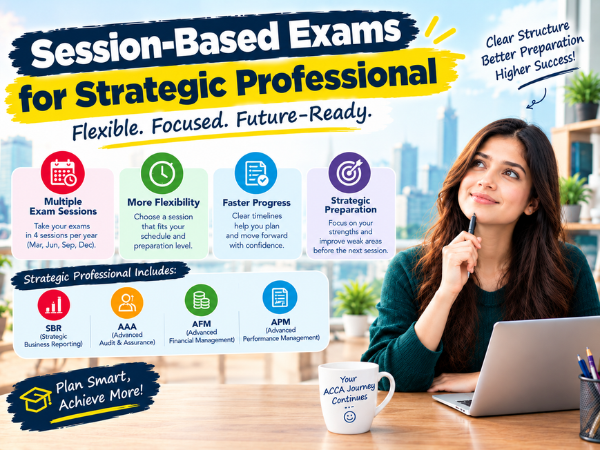
The final level runs in fixed exam sessions. These sessions take place four times a year, in March, June, September and December. Therefore, you should plan these papers around the calendar.
How Many Papers Should You Take Together?
Choose your load carefully. Here is a simple guide.
- One paper at a time: Best for working professionals.
- Two papers together: Best for focused full-time students.
- Three papers together: Only for very strong candidates.
Taking too many papers at once often leads to failure. Consequently, you lose more time than you save.
Practical Experience Requirement (PER)
Exams alone do not make you an ACCA member. You also need practical experience. This requirement is called PER.
What Is PER?
PER means 36 months of relevant work experience. A qualified supervisor must approve your work. You also record specific performance objectives in your online account.
Can You Complete PER While Studying?
Yes, you can. In fact, this is the smartest approach. You work and study together. Then you qualify soon after your last exam.
Does PER Add to the Total Duration?
It can. If you start working late, you may finish exams before you finish PER. Hence, start your career early. Even an internship or a trainee role can help.
ACCA Time Limits You Should Know
ACCA expects you to complete the qualification within a defined window. Rules can change over time. Therefore, always check the latest rules on the official ACCA portal.
Why Time Limits Matter
Some students pass the first few papers and then pause for years. Later, they find that their early results are close to expiring. Avoid this trap. Keep a steady rhythm instead.
How to Stay on Track
- Set a target date for each level.
- Review your progress every three months.
- Book your next exam before the previous result arrives.
- Keep a buffer for one re-sit.
Sample Study Plan for Graduates
A clear plan makes a big difference. Below is a simple example for a graduate with a moderate number of exemptions.
Year 1: Build the Foundation
Start with the remaining Applied Knowledge papers. Then move into easier Applied Skills papers. Good early choices are Corporate and Business Law and Performance Management. These two papers build confidence quickly.
Year 2: Clear the Core Skills
Focus on Taxation, Financial Reporting and Audit and Assurance. These papers need serious practice. Solve past questions every week. Finish with Financial Management.
Year 3: Complete the Strategic Level
Sit Strategic Business Reporting and Strategic Business Leader first. They are the core of the final level. Next, choose your two options based on your career goal.
Choosing Your Option Papers
Match your options to your future role.
- Finance and investment roles: Choose AFM and APM.
- Audit and assurance roles: Choose AAA and APM.
- Tax advisory roles: Choose ATX and AFM.
- General management roles: Choose APM and AFM.
Tips to Finish ACCA Faster
You cannot rush the syllabus. However, you can remove wasted time. These habits help.
Apply for Exemptions Immediately
Do not delay your exemption request. Every exempt paper saves months. Therefore, apply right after you register.
Study Smart, Not Only Hard
Focus on exam technique. Practice past papers under timed conditions. Review your mistakes after each attempt. This approach lifts your pass rate.
Pair papers that share content. For example, study Financial Reporting before Strategic Business Reporting. Likewise, study Performance Management before Advanced Performance Management. This overlap saves revision time.
Protect Your Study Hours
Build a fixed weekly routine. Aim for steady daily study rather than weekend marathons. Consistency beats intensity in ACCA.
Book Exams Early
A confirmed date creates urgency. It also stops endless delay. Book your exam as soon as you start a paper.
Common Mistakes That Delay ACCA
Many students lose a year without noticing. Avoid these errors.
- Sitting too many papers at once. Overload leads to failures.
- Ignoring PER. Late work experience delays membership.
- Skipping past papers. Theory alone does not pass ACCA.
- Choosing the wrong options. This can hurt your career fit.
- Taking long breaks. Knowledge fades, and time limits keep running.
- Not checking exemptions early. You may study papers you did not need.
Is ACCA Worth the Time After Graduation?
Most graduates say yes. ACCA is a globally recognized qualification. It opens doors in audit, tax, financial reporting, corporate finance and consulting.
Career Benefits
- Wider job options in many countries
- Strong demand in accounting and finance firms
- A clear path toward senior finance roles
- Flexible study alongside a job
Time Versus Return
A 3-year commitment is real. Nevertheless, you earn while you learn. You also build a global credential. For motivated graduates, the return is strong.
Conclusion
ACCA course duration after graduation is flexible. Most graduates finish in about 2 to 3.5 years. The qualification has 13 exams, and exemptions can lower that count. In addition, you must complete 36 months of practical experience.
Start by checking your exemptions. Then build a realistic study plan. Take the right number of papers each session. Finally, begin your work experience early. With steady effort, you can earn your ACCA qualification and open a strong global finance career.
Next Step: Share this guide with a friend who is planning ACCA after graduation. Then explore more finance certification guides on Fintelligents.
Frequently Asked Questions
ACCA usually takes 2 to 3.5 years after graduation. The exact time depends on your exemptions and study pace. Add work experience time if you have not started it yet.
ACCA has 13 exams across three levels. These are 3 Applied Knowledge papers, 6 Applied Skills papers and 4 Strategic Professional papers. Exemptions can reduce the number you sit.
Yes, it is possible. You need strong exemptions, full-time study and a clean pass record. Most graduates need slightly longer.
Many B.Com graduates receive exemptions from the Applied Knowledge papers and sometimes a few more. The final number depends on your university and subjects. ACCA confirms your list after review.
Each qualification is different. ACCA is known for its flexible structure and global reach. Difficulty depends on your background and study habits.
Yes. Many students work and study together. They usually take one paper per session. As a result, the timeline stretches to about 4 years.
ACCA allows multiple attempts. However, you must finish within the overall time limit. Check the latest rules on the official portal.
Yes. You need 36 months of approved practical experience. You can gain it while you study.
Many students find Financial Reporting, Audit and Assurance and Strategic Business Reporting demanding. Taxation and Financial Management also need heavy practice.
Start with the Applied Knowledge papers. Next, sit Applied Skills papers in a logical order. Finish with the Strategic Professional level.