Blog
What Is FRM? A Complete Beginner’s Guide

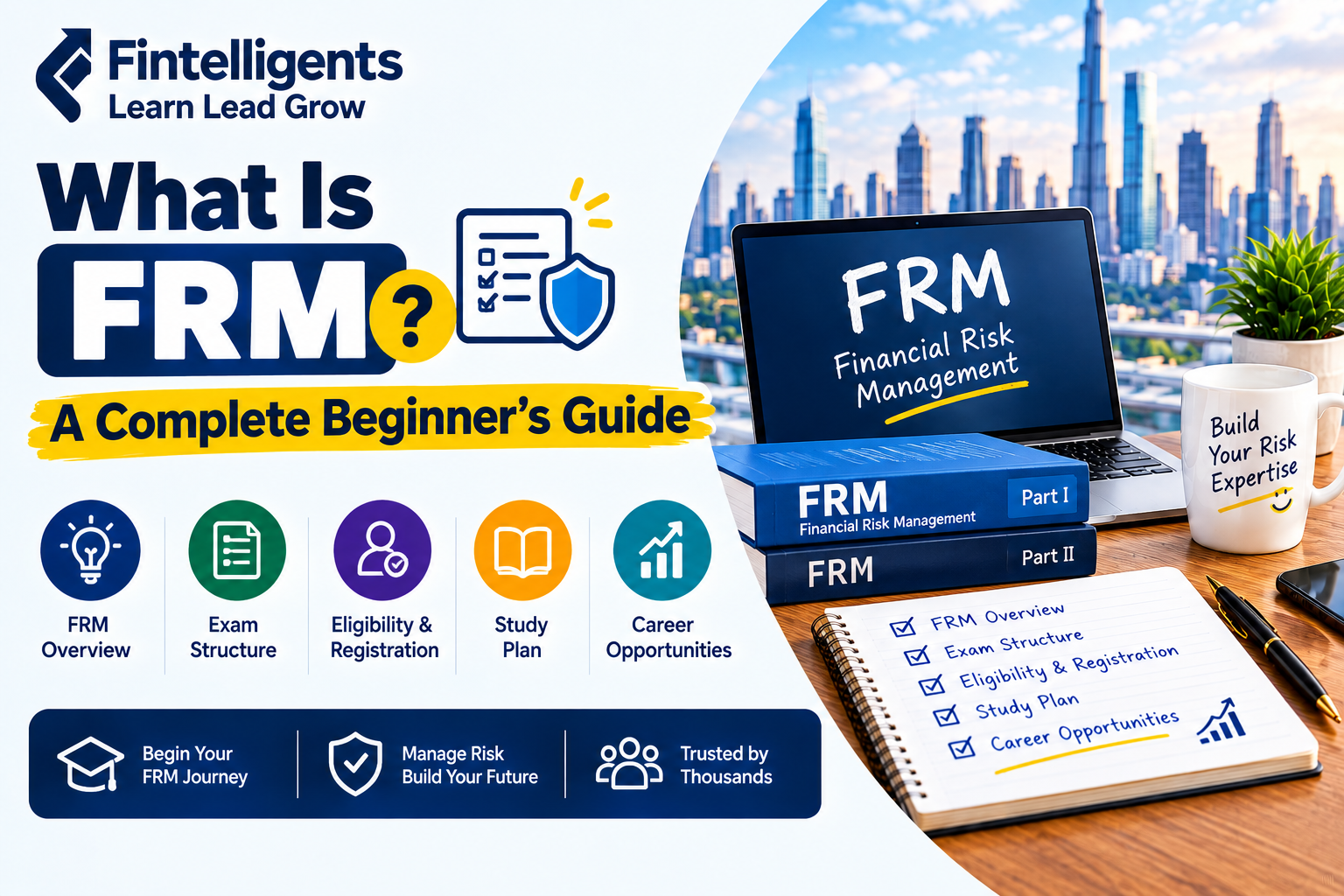
Are you exploring career options in finance and risk management? You have probably come across the term FRM. Many students and professionals ask the same question. What is FRM, and is it worth the effort?
This guide answers that question in simple language. You will learn what FRM stands for. You will understand who offers this certification. You will also learn about the exam pattern, fees, eligibility, and career scope.
By the end of this article, you will know if FRM fits your career goals.
What Is FRM?
FRM stands for Financial Risk Manager. It is a globally recognized certification for risk management professionals. The certification proves that a candidate understands how to identify, measure, and control financial risk.
Banks and financial institutions face many risks every day. These include market risk, credit risk, and operational risk. An FRM-certified professional knows how to manage these risks effectively.
The FRM credential is not a degree. It is a professional certification. You earn it by passing two challenging exams and meeting a work experience requirement.
Who Administers the FRM Certification?
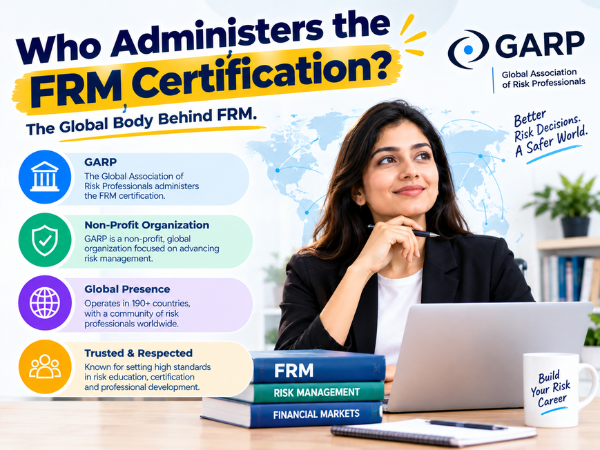
The Global Association of Risk Professionals, known as GARP, administers the FRM program. GARP is a non-profit organization based in the United States. It was founded in 1996.
GARP set out to create a global standard for risk management education. Today, the FRM certification is recognized in more than 190 countries. Around 100,000 professionals worldwide hold this charter.
Major banks, asset management firms, and regulators trust GARP-certified professionals. This trust makes FRM a valuable credential for anyone in finance.
Why Does FRM Matter in Finance?
Financial markets change constantly. New risks appear every year. Companies need experts who can spot these risks early.
FRM-certified professionals bring practical skills to the table. They can calculate Value at Risk. They can stress-test a portfolio. They can also explain why certain investments carry hidden dangers.
This practical focus sets FRM apart from many other finance certifications. The exam tests real skills, not just theory. This makes FRM holders valuable to employers.
FRM Exam Structure Explained
The FRM exam has two parts. You must pass both to earn the full certification. Both exams are computer-based and multiple-choice.
FRM Part 1 has 100 questions. You get four hours to complete it. This part builds your technical foundation. It covers statistics, financial markets, and valuation basics.
FRM Part 2 has 80 questions. You also get four hours for this part. This section applies your knowledge to real-world scenarios. It focuses on market risk, credit risk, and other advanced topics.
GARP offers both exams three times a year. The testing windows are May, August, and November. You can take the exams at Pearson VUE centers worldwide, including major Indian cities like Mumbai, Delhi, and Bangalore.
Can You Take Both Parts Together?
Yes, some candidates choose to sit both parts in the same testing window. However, most experts recommend spacing them out. This approach gives you more time to prepare properly.
FRM Part 1 Syllabus
Part 1 covers four main topics. Each topic carries a different weight in the exam.
| Topic | Weight |
| Foundations of Risk Management | 20% |
| Quantitative Analysis | 20% |
| Financial Markets and Products | 30% |
| Valuation and Risk Models | 30% |
These topics build your core knowledge base. You will learn statistics, probability, and basic risk theory here. This foundation prepares you for the more advanced Part 2 exam.
FRM Part 2 Syllabus
Part 2 shifts focus to application. You will use the concepts from Part 1 in practical situations. The main areas include:
- Market risk measurement and management
- Credit risk measurement and management
- Operational risk and resiliency
- Liquidity and treasury risk management
- Risk management and investment management
- Current issues in financial markets
This part often feels harder for candidates. It requires you to connect theory with real banking scenarios. Case studies and current events also appear frequently.
FRM Eligibility Criteria
Good news for beginners. FRM has no strict entry requirements. You do not need a specific degree. You do not need a minimum GPA. You also do not need prior work experience to sit the exam.
This open eligibility makes FRM accessible to many people. Final-year students often start their FRM journey early. Working professionals from different backgrounds also pursue this certification.
However, you do need two years of relevant work experience eventually. This experience requirement applies only after you pass both exams. GARP will not award the final FRM designation without it.
You must submit this experience within five years of passing Part 2. Interestingly, experience earned up to ten years before passing can also count.
FRM Exam Fees in 2026
Understanding the cost helps you plan your FRM journey better. Here is a breakdown of the standard fee structure for 2026.
| Fee Component | Amount (USD) |
| Enrollment Fee (one-time) | $400 |
| Early Registration (per part) | $600 |
| Standard Registration (per part) | $800 |
The enrollment fee applies only once. You pay it during your first Part 1 registration. You never pay it again, not even for Part 2.
If you register early for both parts, your total cost is around $1,600. Standard registration for both parts costs approximately $2,000. Add study materials, and your total investment could reach $2,500 to $4,000.
Registering early saves you money. Early registration deadlines usually fall a few months before each exam window. Always check the official GARP website for exact dates and current fees.
How Long Does It Take to Complete FRM?

Most candidates take one to two years to finish both parts. GARP recommends around 200 to 240 hours of study per part. This works out to several months of consistent preparation.
Your timeline depends on your existing finance knowledge. It also depends on how many hours you can dedicate weekly. Working professionals often take longer due to time constraints.
Plan your study schedule realistically. Rushing through the syllabus rarely produces good results.
FRM Pass Rates
The FRM exam is genuinely challenging. Pass rates for Part 1 typically range between 45% and 58%. Part 2 pass rates range between 50% and 63%.
These numbers show that thorough preparation matters. Many candidates underestimate the difficulty level. The exam tests deep understanding, not memorization.
Consistent study and quality practice materials improve your chances significantly.
FRM vs CFA: Key Differences
Many beginners confuse FRM with CFA. Both are respected finance certifications, but they serve different purposes.
CFA focuses broadly on investment management and portfolio analysis. FRM focuses specifically on risk management. If you want to become a portfolio manager, CFA may suit you better. If you want to specialize in risk, FRM is the stronger choice.
CFA also has three levels, while FRM has only two parts. This makes FRM slightly quicker to complete. However, both certifications demand serious commitment and study time.
Some professionals even pursue both certifications for broader career opportunities.
Career Opportunities After FRM
FRM opens doors to several specialized roles in finance. Common job titles for FRM holders include:
- Risk Analyst
- Credit Risk Manager
- Market Risk Manager
- Chief Risk Officer
- Portfolio Risk Manager
- Regulatory Risk Consultant
- Treasury Risk Analyst
Banks, hedge funds, insurance companies, and regulatory bodies actively hire FRM-certified professionals. Consulting firms also value this credential highly.
The certification signals to employers that you understand real risk challenges. This practical credibility often leads to faster career growth.
FRM Salary Potential

Salary varies based on location, experience, and employer type. However, FRM holders generally earn competitive salaries compared to non-certified peers.
Entry-level risk analysts with FRM certification often earn more than their uncertified counterparts. Experienced FRM professionals in senior roles, such as Chief Risk Officer, can command significantly higher packages.
Global financial hubs like New York, London, and Singapore typically offer higher compensation. Emerging markets also show growing demand for risk professionals.
How to Prepare for the FRM Exam
Preparation requires a structured approach. Here are some practical tips for beginners.
Start with the official curriculum. GARP provides study materials with your registration. Use these as your foundation.
Consider prep providers. Many candidates use third-party providers for structured video lessons and practice questions. These resources often simplify complex topics.
Practice with mock exams. Regular practice tests help you manage time during the actual exam. They also reveal weak areas that need more attention.
Create a study schedule. Break the syllabus into weekly goals. Consistency matters more than last-minute cramming.
Join study groups. Discussing concepts with peers can clarify doubts quickly. Many online communities exist for FRM candidates.
Is FRM Worth It in 2026?
FRM remains highly relevant for anyone serious about a risk management career. Financial institutions continue to face growing regulatory scrutiny. This demand keeps risk professionals in high demand.
The certification requires significant time and money. However, the career benefits often outweigh these costs. Improved job prospects, higher salaries, and global recognition make FRM a strong investment.
If you enjoy analytical work and want to specialize in risk, FRM is worth pursuing.
Frequently Asked Questions
FRM stands for Financial Risk Manager. It is a certification offered by GARP for risk management professionals.
FRM has two exams. These are called Part 1 and Part 2. You must pass both to earn the certification.
No. FRM has no formal education requirement. Anyone can register for the exam regardless of their academic background.
The total cost ranges from approximately $1,600 to $2,000 for exam fees alone. This includes the one-time enrollment fee and both exam fees.
Most candidates complete both parts within one to two years. You also need two years of work experience for the final designation.
Difficulty is subjective. FRM focuses deeply on risk topics, while CFA covers broader investment concepts. Many candidates find FRM Part 2 more application-based and challenging.
Yes, you can sit the exams without prior work experience. However, you need two years of relevant experience to receive the final certification.
FRM holders often work as risk analysts, credit risk managers, market risk managers, and treasury risk specialists.
Yes. FRM is recognized in more than 190 countries. Major banks and financial institutions worldwide value this certification.
The FRM exam is challenging. Pass rates typically range between 45% and 63% depending on the part and testing window.
Conclusion
FRM is a powerful certification for anyone interested in financial risk management. It offers global recognition, practical skills, and strong career growth potential.
The journey requires dedication. You need to pass two rigorous exams. You also need relevant work experience. However, the rewards make this effort worthwhile for serious finance professionals.
Start your FRM journey with clear goals and a structured study plan. Your future in risk management begins with this first step.