Blog
Risk and AI Certification: Who Should Do It and What Career Doors It Opens in 2026

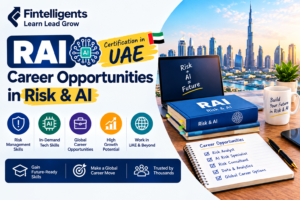
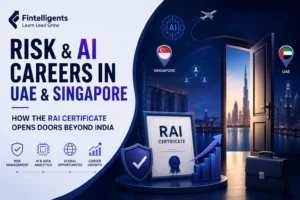
Artificial intelligence is no longer just a technology topic. It has become a core part of how financial institutions manage risk, make decisions, and operate at scale. The Risk and AI certification 2026 from GARP is one of the first globally recognised credentials that sits directly at this intersection. If you work in finance or risk and want to understand what this certification is about and whether it makes sense for your career, this blog covers everything you need to know.
What Is the Risk and AI Certification?
The Risk and AI certification, formally known as the RAI certificate, is offered by GARP. It is designed for finance and risk professionals who want to understand how artificial intelligence and machine learning are being applied in financial services, and specifically how the risks that come with these technologies are identified, measured, and managed.
The Risk and AI certification 2026 covers topics that most traditional finance certifications do not touch at all, including algorithmic decision making, model risk management in AI systems, data governance, and the ethical and regulatory dimensions of using AI in financial contexts.
What Does the RAI Certification Cover?
The content of the Risk and AI certification is organised around a few core areas.
AI and Machine Learning in Financial Services
This section covers how AI and machine learning are being used across financial services today, including credit scoring, fraud detection, algorithmic trading, and risk modelling. It gives candidates a clear picture of where AI is already embedded in the industry.
Model Risk Management
One of the most relevant sections for risk professionals. It covers how financial institutions identify, assess, and manage the risks that come specifically from using AI models in decision making processes. This includes model validation, monitoring, and governance frameworks for AI systems.
Data and Technology Risk
Covers the risks associated with the data that AI systems depend on, including data quality issues, bias in training data, and how data governance frameworks apply in an AI context.
Ethics and Regulation of AI
As AI regulation picks up globally, this section covers the evolving regulatory landscape for AI in finance, including how institutions are expected to ensure fairness, transparency, and accountability in AI driven decisions.
Risk Governance for AI Systems
Covers how boards and senior management are expected to oversee AI risk, including frameworks for accountability and escalation when AI systems produce unexpected or harmful outcomes.
Who Should Pursue the Risk and AI Certification in 2026?
The Risk and AI certification 2026 is relevant for a wider group of professionals than you might initially expect.
Risk managers and analysts who work with or oversee AI driven models in credit, market, or operational risk functions will find the content directly applicable. As more risk decisions involve AI systems, understanding how to manage the risks those systems introduce is becoming a core competency.
Technology and data professionals working in financial services who want to build credibility in risk management and governance will find the RAI certificate a strong differentiator. It bridges the gap between technical AI knowledge and financial risk management frameworks.
Compliance and regulatory professionals who need to understand how AI regulation is evolving and what their institutions need to do to stay compliant as rules around algorithmic decision making tighten.
Finance professionals broadly who want to stay ahead of how AI is reshaping their industry and build a credential that signals they understand not just what AI does but what risks it introduces and how those risks are managed.
For context on why this matters so urgently right now, Why Risk and AI Will Be the Most Important Skill in FinTech by 2026 covers the bigger picture well.
What Career Doors Does the Risk and AI Certification Open?
The Risk and AI certification 2026 is new enough that it is still building its footprint in the job market, but the roles it is most relevant for are growing fast.
Model risk management teams at banks and financial institutions are expanding as AI adoption increases and regulators demand more rigorous oversight of AI systems. Candidates with the RAI certificate are well positioned for roles in this space.
AI governance and responsible AI roles are emerging at major financial institutions as they build dedicated functions to oversee how AI is developed and deployed. The Risk and AI certification provides exactly the kind of structured knowledge these roles require.
Risk technology roles that sit between traditional risk functions and technology teams benefit significantly from what the RAI covers. Professionals who can speak both risk and AI fluently are in short supply.
For a view of how AI is already reshaping traditional risk careers, Why FRM Certification Matters More Than Ever in an AI Driven Finance World gives useful context on where the industry is heading.
How Does the RAI Fit Alongside Other Certifications?
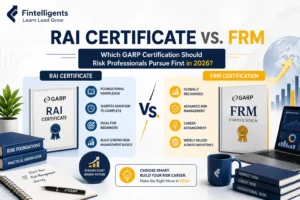
The Risk and AI certification 2026 is designed to complement existing credentials rather than replace them. A candidate who holds the FRM and adds the RAI certificate has a profile that covers both traditional financial risk management and the emerging AI risk dimension. Similarly a CFA charterholder who adds the RAI certificate signals both investment expertise and an understanding of how AI is changing the investment landscape.
For Indian finance professionals specifically, How India Is Becoming a Global Hub for Risk and Finance Talent covers how demand for specialised risk credentials is growing in the Indian market and what that means for career opportunities.
Getting started with the Risk and AI certification through a structured coaching program gives you the preparation and faculty support needed to navigate content that spans both financial risk and technology domains.
Conclusion
The Risk and AI certification 2026 is one of the most forward looking credentials available to finance and risk professionals today. As AI becomes embedded in more financial decisions and regulators increase their scrutiny of how institutions use it, professionals who understand AI risk management will be in high demand. Whether you are already working in risk, compliance, or technology within financial services, the RAI certificate is a credential worth serious consideration as part of your long term professional development plan.
Enroll for your Risk and AI certification coaching at Fintelligents and get expert guidance from a team that prepares candidates across GARP certifications for the roles financial services is creating right now.
Frequently Asked Questions (FAQs)
Q. What is the Risk and AI certification from GARP?
The Risk and AI certificate, also known as RAI, is a GARP credential for finance and risk professionals that covers how artificial intelligence is used in financial services and how the risks associated with AI systems are identified, managed, and governed.
Q. Do I need a technical background to pursue the Risk and AI certification?
Not necessarily. The RAI certificate is designed for finance and risk professionals, not just technology specialists. A basic understanding of financial risk concepts and some familiarity with how AI works in practice is helpful but a deep technical background in machine learning or data science is not required.
Q. How does the Risk and AI certification complement the FRM?
The FRM covers traditional financial risk management in depth. The Risk and AI certification adds the AI governance and model risk management layer on top of that. Together they give a candidate a profile that covers both conventional risk and the increasingly important dimension of managing risk in AI driven financial systems.