Blog
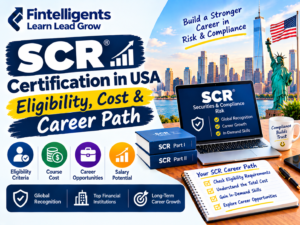
SCR Certification in USA: Jobs, Salary and Career Path

The SCR certification in USA is one of the fastest ways to enter climate risk. It is the Sustainability and Climate Risk (SCR) Certificate from GARP. Banks, insurers and asset managers now need staff who understand climate risk. This guide shows you the exam, the jobs, the pay and the career path.
Quick answer: The SCR certificate is a GARP credential for climate and sustainability risk. The exam has 80 multiple-choice questions and runs up to four hours. GARP suggests 100 to 150 study hours. It suits finance, risk, audit and sustainability professionals in the USA.
What Is the SCR Certification in USA?
The SCR certificate teaches you how to measure and manage climate-related risk. GARP, the Global Association of Risk Professionals, created it. GARP also runs the well-known FRM exam.
The credential is global. Still, it fits the US market well. American firms face new disclosure rules, investor pressure and physical climate losses. Therefore, they hire people who can turn climate data into risk decisions.
What Does SCR Stand For?
SCR stands for Sustainability and Climate Risk. The certificate proves you understand both topics. It covers climate science, policy, finance and risk models.
Why Climate Risk Skills Matter in the US
Climate risk now affects credit, insurance and investment returns. Floods, wildfires and storms damage assets and raise costs. At the same time, regulators and investors ask firms to explain their exposure.
As a result, climate risk has moved from a side topic to a core risk function. That shift creates steady demand for trained professionals.
SCR Exam Format at a Glance
The table below answers the most common exam questions. These details come from the GARP SCR FAQ for the 2026 curriculum. Always check GARP for the latest dates and fees before you register.
| Item | Detail |
| Questions | 80 multiple-choice questions, including one case study |
| Time limit | Up to 4 hours |
| Language | American English |
| Experience needed | None required |
| Suggested study time | 100 to 150 hours |
| Results | About 4 to 6 weeks after the exam window closes |
| Retake fee | USD 350, for the next two exam cycles |
| Renewal | 20 CPD credits per two-year cycle |
SCR Exam Topics and Syllabus
The syllabus follows a clear learning path. First, you learn the basics of climate change and sustainability. Next, you study risk, governance and finance. Finally, you apply the tools.
- Foundations of climate change
- Sustainability
- Climate change risk
- Policy, culture and governance
- Green and sustainable finance
- Climate risk measurement and management
- Climate models and scenario analysis
- Net zero
- Climate and nature risk assessment
- Transition planning and carbon reporting
How Hard Is the SCR Exam?
The SCR is moderate in difficulty. You do not need a science degree. However, you must learn new terms and models. Scenario analysis and carbon reporting usually need the most practice.
Most candidates succeed with a steady plan. Study a little each week. Then take full practice exams before test day.
Who Should Take the SCR Certificate?
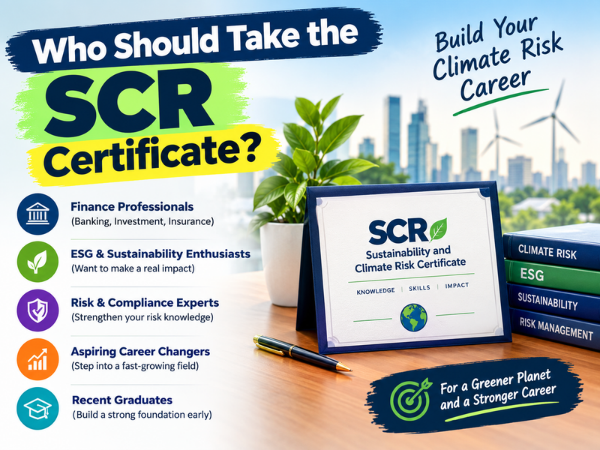
The SCR certificate suits many roles. It also helps career changers, because no work experience is required.
Finance and Risk Professionals
Credit analysts, market risk staff and portfolio managers gain the most. Climate factors now shape loan and investment decisions. Your current skills plus the SCR make a strong mix.
Audit, Compliance and Consulting Staff
Auditors and compliance officers must review climate disclosures. Consultants must advise clients on transition plans. The SCR gives you a shared language for both tasks.
Students and Career Changers
Students can use the SCR to stand out early. Career changers can use it to prove new skills. In both cases, it shows clear intent to work in climate risk.
SCR Certification Jobs in the USA
Climate risk jobs appear in banks, insurers, asset managers, consulting firms and corporates. Titles differ by firm. Nevertheless, the work follows a common ladder.
Entry-Level Climate Risk Jobs
These roles suit new graduates and career changers.
- Climate risk analyst
- ESG data analyst
- Sustainability reporting associate
- Risk and controls analyst with a climate focus
Mid-Level Climate Risk Jobs
These roles need two to six years of experience.
- Climate risk manager
- Scenario analysis specialist
- Sustainable finance associate
- Transition risk consultant
Senior Climate Risk Jobs
Senior roles lead teams and shape strategy.
- Head of climate risk
- Director of sustainability risk
- Chief risk officer, with climate in scope
Where Do Employers Hire?
Banks and insurers hire for risk teams. Asset managers hire for stewardship and ESG research. Consultancies hire for advisory projects. Corporates hire for reporting and strategy.
SCR Certification Salary in the USA
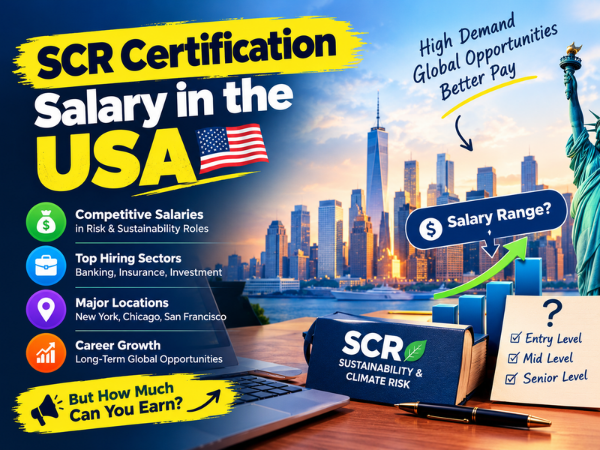
Pay depends on city, employer type and experience. The ranges below are approximate and for planning only. Check current job listings before you set salary goals.
| Level | Typical roles | Approximate annual base pay (USD) |
| Entry | Climate risk analyst, ESG data analyst | 70,000 to 100,000 |
| Mid | Climate risk manager, scenario specialist | 110,000 to 160,000 |
| Senior | Head of climate risk, director | 170,000 to 250,000+ |
What Affects Your Climate Risk Salary?
Several factors move your pay. Location matters, since New York, San Francisco and Charlotte often pay more. Employer type matters too, because large banks usually pay above consultancies. Finally, a mix of skills raises your value. For example, climate knowledge plus FRM or data skills is rare and in demand.
Does the SCR Certificate Raise Pay?
The certificate alone does not set your salary. However, it proves skills that employers need. It can help you win interviews, change roles or earn a promotion.
Climate Risk Career Path, Step by Step
Use this path to plan your first five years. Adjust it to your own background.
- Build the base. Learn core finance and risk concepts. Basic data skills help too.
- Earn the SCR certificate. Study for 100 to 150 hours. Use practice exams.
- Land a first climate role. Target analyst jobs in risk, ESG or reporting.
- Add a specialty. Pick scenario analysis, carbon accounting or sustainable finance.
- Stack a second credential. Many professionals add the FRM for broad risk depth.
- Move into leadership. Lead a team, own a framework and advise senior management.
SCR vs FRM vs CFA ESG
People often ask which credential to pick. The answer depends on your goal.
| Credential | Main focus | Best for |
| SCR (GARP) | Climate and sustainability risk | Climate risk and ESG risk roles |
| FRM (GARP) | Broad financial risk management | Banks, risk and treasury careers |
| CFA Certificate in ESG Investing | ESG in investment analysis | Portfolio and research roles |
Choose the SCR if you want a climate risk career. Choose the FRM if you want wide risk coverage. Many professionals take both, because the skills overlap and support each other.
How to Prepare for the SCR Exam
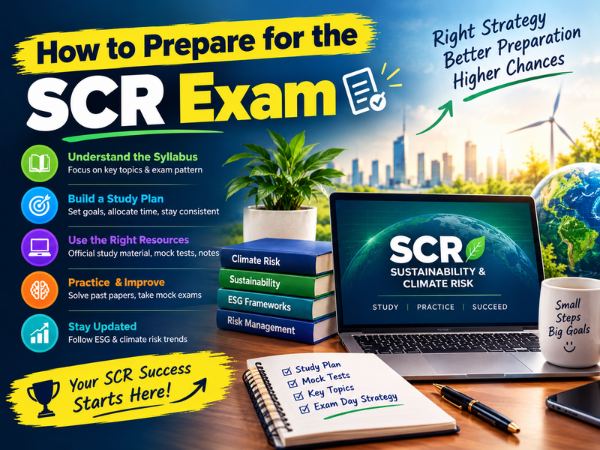
A simple plan works best. Follow these steps over 10 to 12 weeks.
Step 1: Set an Exam Date
Pick an exam window first. A fixed date keeps you consistent. Register early to secure your seat.
Step 2: Study by Topic
Split the syllabus into ten blocks. Study one block each week. Take short notes in your own words.
Step 3: Practice Every Week
Solve questions after each block. Then review every wrong answer. This habit builds speed and accuracy.
Step 4: Take Full Mock Exams
Sit two full practice exams under timed conditions. Aim to finish with time to review. Then fix your weak topics.
Step 5: Revise and Rest
Revise formulas, definitions and scenario concepts in the last week. Sleep well before the exam. Confidence comes from preparation.
Final Thoughts
The SCR certification in USA gives you a clear path into climate risk. It is flexible, it needs no experience, and it matches rising employer demand. Start with a study plan, set an exam date and build your skills week by week.
SCR Certification FAQ
The SCR certification in USA is the GARP Sustainability and Climate Risk Certificate, taken by US-based professionals. It proves skill in climate risk, sustainable finance and scenario analysis.
Yes, for many finance and risk professionals. Climate risk is a growing function. The certificate shows employers you have the right knowledge. It works best when paired with finance or risk experience.
The exam has 80 multiple-choice questions. One of them is a case study. You have up to four hours to finish.
GARP suggests 100 to 150 hours. Most candidates spread this over 10 to 12 weeks.
No. The exam does not require work experience. Students and career changers can sit for it.
Common roles include climate risk analyst, ESG analyst, sustainable finance associate and climate risk manager. With experience, you can reach head of climate risk.
Common roles include climate risk analyst, ESG analyst, sustainable finance associate and climate risk manager. With experience, you can reach head of climate risk.
Entry roles often pay about 70,000 to 100,000 USD. Mid-level roles often pay about 110,000 to 160,000 USD. Senior roles can pass 170,000 USD. These are approximate ranges.
Take the SCR first if you want to work in climate risk right now. Take the FRM first if you want a broad risk career. You can add the second later.
GARP asks holders to earn 20 CPD credits every two years to stay current. Check GARP for the latest renewal rules.