Blog
SCR Certification in Singapore: Registration & Fees Guide

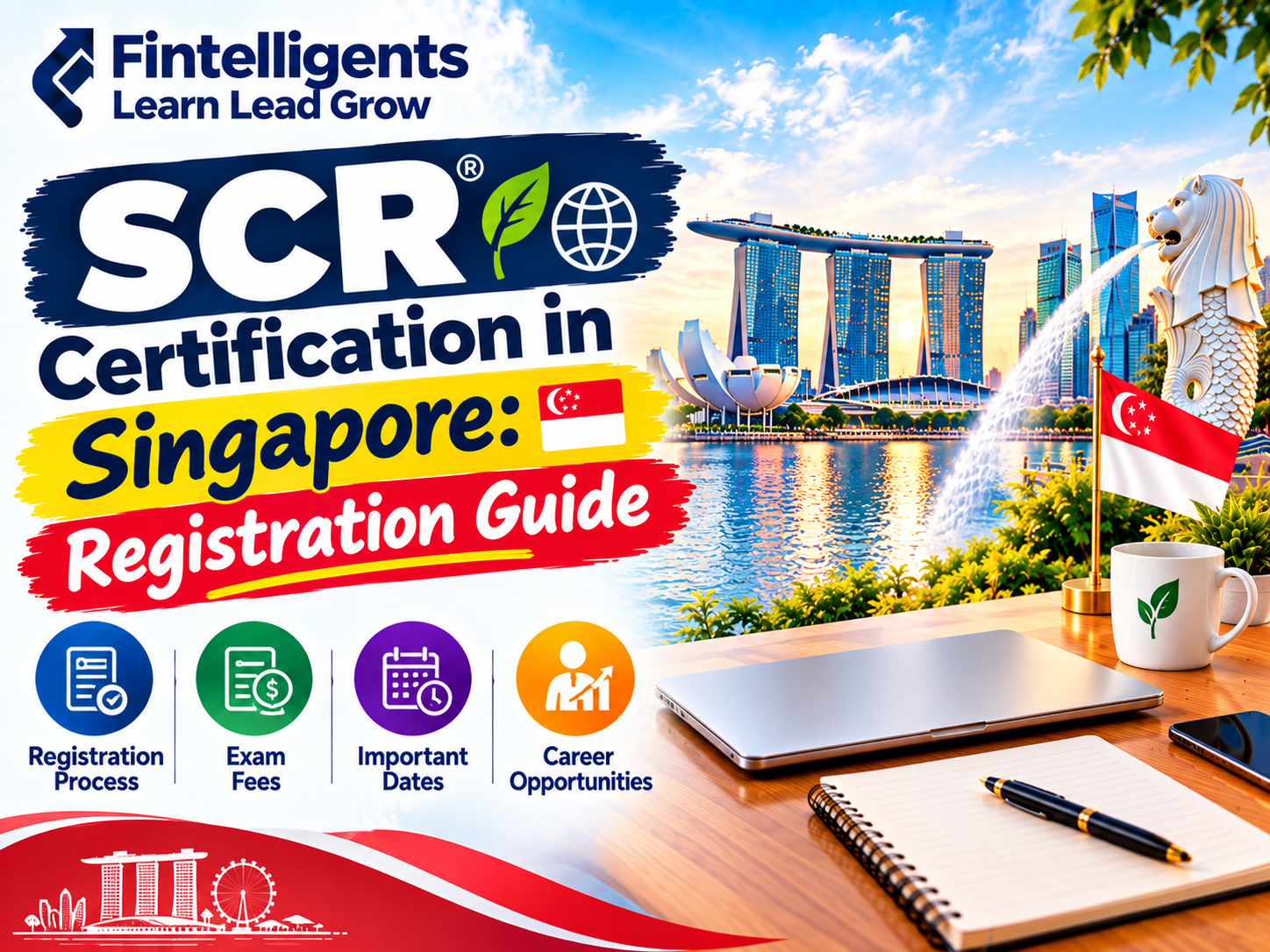
The Sustainability and Climate Risk (SCR) Certification is growing fast among finance professionals in Singapore. Banks, asset managers, and regulators now expect climate risk knowledge as a core skill. This guide covers the full SCR certification in Singapore process. You will learn the eligibility rules, exam structure, registration steps, and fees in detail.
What Is SCR Certification?
The SCR Certification stands for Sustainability and Climate Risk. The Global Association of Risk Professionals (GARP) issues this credential. It tests your knowledge of climate risk, green finance, and sustainable investing. The exam is fully online. You do not need to visit a physical center in most cases.
Finance professionals across the world use SCR to build climate expertise. Singapore has emerged as a major hub for this certification. The country’s push toward green finance makes SCR highly relevant here.
Who Created the SCR Certificate?
GARP is a global body known for the FRM certification. GARP launched SCR to meet rising demand for climate risk skills. The certificate blends finance theory with practical climate science. It suits bankers, risk managers, auditors, and policy analysts alike.
Why Pursue SCR Certification in Singapore?
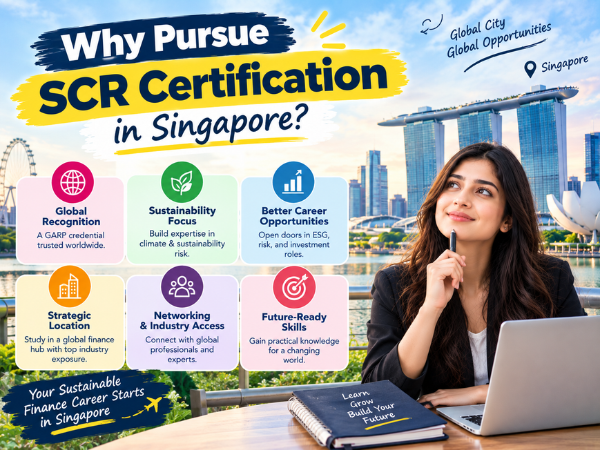
Singapore wants to become Asia’s green finance center. The Monetary Authority of Singapore (MAS) pushes banks to build climate risk teams. Many local banks now hire staff with SCR knowledge. This creates strong demand for certified professionals.
Growing Green Finance Sector
Singapore hosts several sustainability-linked bond issuances each year. Local banks manage large green loan portfolios. Companies need staff who understand climate disclosure rules. SCR certification in Singapore gives you this exact skill set.
Government and Regulatory Support
MAS has rolled out multiple green finance initiatives. The Green Finance Industry Taskforce guides banks on climate risk standards. Professionals with SCR credentials fit well into these regulatory frameworks. Employers value staff who already understand these rules.
Career Growth Opportunities
Singapore’s finance sector rewards specialized skills. SCR holders often move into ESG risk roles. Some professionals use SCR to transition from traditional banking into sustainability functions. The certificate opens doors across banking, insurance, and asset management.
SCR Certification Eligibility Criteria
The SCR exam has no strict eligibility barrier. This makes it accessible to a wide range of candidates.
No Work Experience Required
You do not need prior work experience to sit for the SCR exam. Fresh graduates can register directly. This differs from other GARP certifications like FRM, which require experience for full certification.
No Educational Prerequisite
GARP does not demand a specific degree. Candidates from finance, science, engineering, or law backgrounds can attempt the exam. A basic understanding of finance concepts helps you prepare faster.
Who Should Take This Exam?
• Risk management professionals working in banks
• ESG analysts and sustainability consultants
• Compliance officers handling climate disclosure
• Finance graduates seeking specialized skills
• Auditors reviewing sustainability reports
SCR Exam Format and Syllabus
Understanding the exam structure helps you plan your study schedule better.
Exam Structure
The SCR exam contains 80 multiple-choice questions. You get four hours to complete it. The test uses computer-based testing through Pearson VUE centers. Singapore has testing centers available for in-person exams. You can also choose an online proctored option.
Core Syllabus Topics
The syllabus covers four major reading areas:
1. Foundations of Climate Change and Sustainability
2. Climate Risk
3. Climate Risk Measurement and Management
4. Sustainable and Green Finance
Each area builds on core climate science and finance principles. GARP updates the curriculum yearly to match current regulations.
Study Materials Provided
GARP gives you access to a digital learning platform after registration. This includes the official SCR book, practice questions, and video content. Singapore candidates also get access to a Climate Practical Applied Learning tool.
How to Register for SCR Certification in Singapore
Registration happens directly through the GARP website. The process is simple and fully digital.
Step-by-Step Registration Process
Step 1: Create a GARP Account Visit the official GARP portal and create your candidate profile. Provide your basic personal and contact details.
Step 2: Choose Your Registration Window GARP opens early and standard registration periods before each exam. Early registration saves you money. Choose the window that fits your study timeline.
Step 3: Select Your Exam Format Pick between an in-person Pearson VUE center or online proctoring. Singapore candidates can find Pearson VUE centers across the city. Step 4: Make Payment Pay the applicable exam fee using a credit card or approved payment method. Your fee also includes six months of complimentary GARP membership. Step 5: Schedule Your Exam After registration, book your exact exam date and time slot. Do this early to secure your preferred center or online slot.
Step 6: Access Study Materials Once payment clears, GARP activates your learning portal. Start preparing immediately using the provided resources.
Documents Needed for Registration
You need a valid government-issued photo ID. Your name on the ID must match your GARP profile exactly. Keep this ID ready on exam day for verification.
SCR Certification Fees in Singapore
Fees form a major part of your certification planning. Singapore candidates pay in US dollars through the GARP portal.
GARP SCR Exam Fee Structure
Candidate Type Early Registration Standard Registration Non-GARP Member USD 650 USD 750 Individual GARP Member USD 550 USD 650 Certified FRM / ERP Holder USD 525 USD 625
Additional Costs to Consider
GARP Individual Membership costs USD 195 per year. Your SCR registration includes six months free. You may pay this fee separately if you want membership beyond that period.
Retake Fees
Candidates who do not pass can retake the exam. A retake within the next two exam windows costs USD 350. After twelve months, you must pay the full exam fee again.
Optional Study Material Costs
The official SCR book costs around USD 100, plus shipping. Most candidates find the free digital learning platform sufficient for preparation.
SCR Exam Dates 2026
GARP conducts the SCR exam twice each year. The exam windows typically fall in April and October.
Registration Deadlines
Early registration usually opens in December for the April exam. Standard registration follows in February. For the October exam, early registration opens around May, with standard registration following later in summer. Always check the official GARP calendar for exact dates, since these shift slightly each year.
Planning Your Study Timeline

Most candidates need three to four months of preparation. Register early to lock in the lower fee and secure adequate study time.
SSG-Funded SCR Training Programs in Singapore
Singapore offers local training support for SCR candidates. SkillsFuture Singapore (SSG) provides funding for approved programs.
NUS Risk Management Institute Program
The NUS Risk Management Institute (RMI) runs an SCR training program. This program complements the official GARP curriculum with structured local classes. Singapore Citizens and Permanent Residents can access government subsidies for this training.
Funding Breakdown for Singapore Citizens and PRs
| Category Singapore Citizens (40 years and above) Singapore Citizens (below 40 years) Singapore PRs International Participants | Nett Fee After Subsidy |
| Lower nett fee under MCES support | |
| Standard nett fee | |
| Standard nett fee | |
| Full programme fee applies |
Citizens aged 40 and above may access additional subsidies under the Mid-Career Enhanced Subsidy scheme. This can reduce the nett fee significantly.
Why Choose a Local Training Program?
Local programs offer structured classes with an instructor. This suits candidates who prefer guided learning over self-study. It also connects you with a peer group preparing for the same exam.
Benefits of SCR Certification for Singapore Professionals
The certificate delivers value across multiple career stages.
Recognized Global Credential
Employers worldwide recognize the SCR badge. You receive a digital credential for LinkedIn after passing. This builds your professional profile instantly.
Strong Fit for Singapore’s Finance Hub
Singapore positions itself as Asia’s sustainable finance center. Local banks, insurers, and asset managers actively seek SCR-certified staff. This makes the certificate highly relevant to the local job market.
Career Mobility
SCR holders can move between risk, compliance, and ESG advisory roles. The skill set applies across banking, insurance, and corporate sustainability teams.
Salary and Promotion Potential
Many Singapore employers now list SCR as a preferred qualification for ESG roles. Certified professionals often gain an edge during promotions and salary negotiations.
SCR vs Other Sustainability Certifications
Candidates often compare SCR against similar credentials before choosing one.
SCR vs CFA Sustainable Investing Certificate
Both certificates test sustainability knowledge, but their focus differs. SCR leans heavily on climate risk and financial risk management. The CFA Institute’s certificate focuses more broadly on sustainable investing practices. SCR fees run slightly lower for most candidate categories.
SCR vs FRM
FRM is a broader risk management credential requiring work experience for full certification. SCR has no experience requirement and takes less time to complete. Many candidates pursue SCR first, then move on to FRM later.
Which One Should You Choose?
Choose SCR if you want a fast, focused credential in climate risk. Choose FRM if you seek a comprehensive risk management career path. Many Singapore professionals eventually hold both certifications.
Tips to Pass the SCR Exam
A clear study plan improves your chances of success significantly.
Build a Structured Study Schedule
Break the four syllabus areas into weekly study blocks. Dedicate more time to Climate Risk Measurement, since this area carries significant exam weight.
Use Official Practice Questions
GARP provides practice exams within the digital learning portal. Attempt these regularly to track your progress and identify weak areas.
Join a Local Study Group
Singapore has active finance professional communities. Joining a study group or an SSG-funded class keeps you accountable and motivated.
Revise Key Definitions Thoroughly
The exam tests precise climate and finance terminology. Create flashcards for key terms like transition risk, physical risk, and scope emissions categories.
Take a Final Mock Exam
Complete at least one full-length mock exam under timed conditions before your actual test date. This builds confidence and improves your time management on exam day.
Conclusion
SCR certification in Singapore offers a clear path into the growing green finance sector. The exam has no strict eligibility barrier, making it accessible to graduates and experienced professionals alike. Registration happens directly through GARP, with local SSG-funded training options available for Citizens and PRs. Understanding the fees, exam dates, and syllabus early helps you plan your certification journey with confidence. Singapore’s push toward sustainable finance makes this credential a smart long-term career investment.
FAQs
SCR stands for Sustainability and Climate Risk. GARP issues this global certificate to test knowledge of climate risk and sustainable finance.
Fees range from USD 525 to USD 750, depending on your GARP membership status and registration window.
No. GARP does not require any work experience or specific degree to sit for the SCR exam.
Yes. SkillsFuture Singapore (SSG) supports approved local training programs, such as the one offered by NUS Risk Management Institute.
GARP conducts the SCR exam twice a year, typically in April and October.
Yes. Candidates can choose between in-person testing at a Pearson VUE center or an online proctored exam.
You can retake the exam for USD 350 within the next two exam windows. After twelve months, the full exam fee applies again.
Yes. Singapore’s growing green finance sector actively seeks professionals with climate risk expertise, making SCR a valuable credential.