Blog
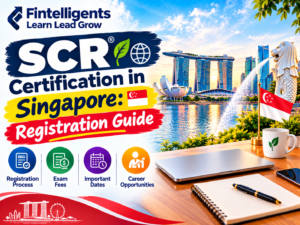
SCR Certification in Singapore: Career Path & Salary

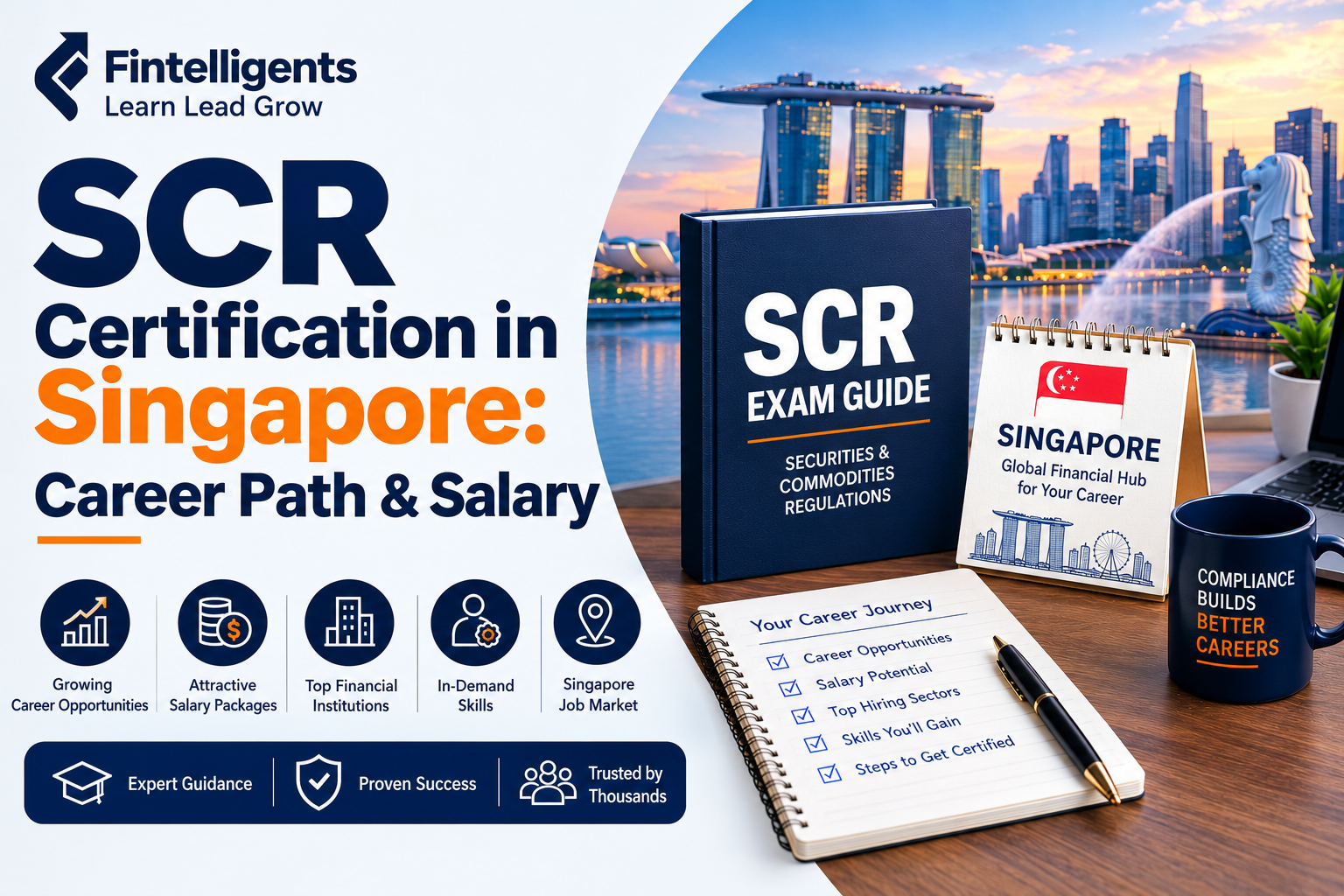
SCR Certification in Singapore Sustainability is no longer a side topic in finance. Banks, asset managers, and regulators in Singapore now treat climate risk as core business risk. This shift has created strong demand for professionals who hold the SCR Certification.
If you want a finance credential that opens doors in ESG, risk management, and green finance, the SCR Certification deserves a close look. This guide covers the exam, the skills you gain, the career path, and realistic salary expectations in Singapore.
What Is SCR Certification?
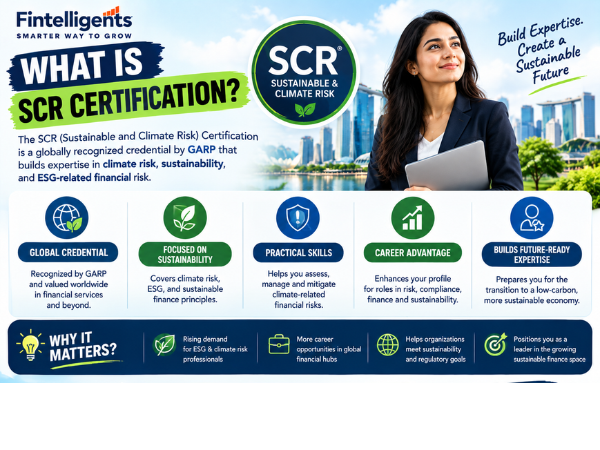
SCR stands for Sustainability and Climate Risk. The Global Association of Risk Professionals, known as GARP, awards this certificate. It validates your knowledge of climate science, ESG frameworks, and climate risk management.
The SCR Certificate is not an academic degree. It is a practical, industry-recognised credential. It signals that you understand how climate change affects financial decisions, regulation, and corporate strategy.
Unlike many finance certifications, SCR has no mandatory work experience requirement. This makes it accessible to fresh graduates, career switchers, and experienced professionals alike.
Why SCR Certification Matters in Singapore
Singapore has positioned itself as a regional hub for green finance. The Monetary Authority of Singapore, or MAS, pushes financial institutions to manage climate-related risks seriously. SCR Certification in Singapore This creates real demand for certified talent.
Growing ESG Regulations in Singapore
Listed companies in Singapore must now report climate-related disclosures. Regulators expect standardised reporting aligned with global frameworks like ISSB and TCFD. Firms need staff who can interpret these standards correctly.
MAS Climate Risk Requirements
MAS has issued environmental risk management guidelines for banks, insurers, and asset managers. These guidelines require stress testing, scenario analysis, and governance around climate exposure. SCR-certified staff bring exactly this skill set.
A Regional Financial Hub With Global Reach
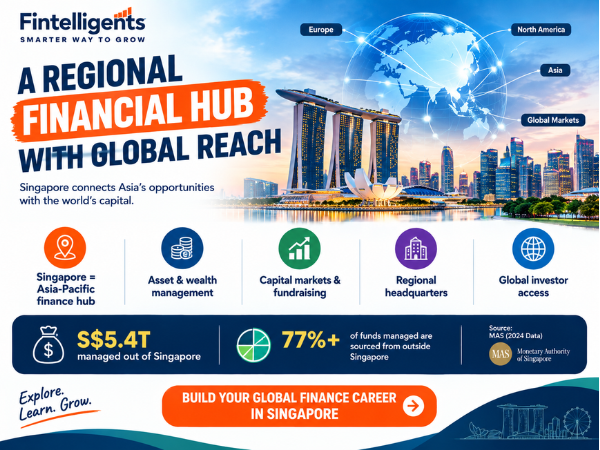
Singapore hosts regional offices for major global banks and asset managers. Many of these firms operate across Asia Pacific. An SCR credential travels well across these markets, adding value beyond Singapore alone.
SCR Exam Overview
Before you commit time and money, it helps to understand exactly what the exam involves.
Exam Format
The SCR Exam is a computer-based, multiple-choice test. It includes about 80 questions, with one multi-part case study. Candidates get four hours to complete the exam. You can sit the exam at a Pearson VUE test centre or through online proctoring.
Exam Fees
Exam pricing depends on your registration window. Early registration costs less than standard registration. As of 2026, the standard exam fee is around USD 575 for first-time candidates. Candidates who fail can retake the exam for a reduced fee of USD 350 within the next two exam windows.
Fees typically exclude local taxes such as GST. Always check the official GARP fee schedule before you register, since prices can change between exam cycles.
Exam Syllabus and Domains
The SCR curriculum covers foundational climate science through applied risk management. Core domains include:
- Foundations of climate change and sustainability
- Climate change risk drivers and their financial impact
- Climate risk measurement and management approaches
- Climate scenario analysis and stress testing
- Green and sustainable finance instruments
- Disclosure frameworks, including TCFD and ISSB IFRS S2
- Net-zero strategy and transition planning
The exam tests applied judgement, not just memorisation. You need to explain concepts, apply methods, and recommend actions based on real scenarios.
Eligibility Criteria for SCR Certification
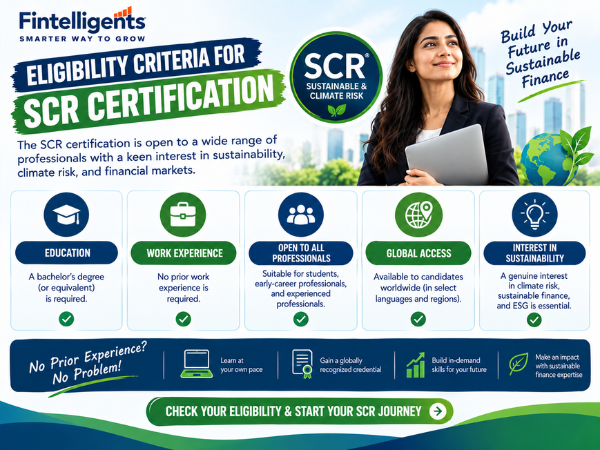
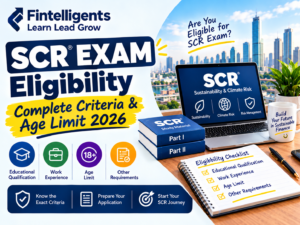
SCR certification has an open eligibility policy. GARP does not require a specific degree or minimum years of experience. Anyone can register and sit the exam.
This open approach benefits several groups:
- Finance graduates who want an ESG specialisation
- Risk professionals pivoting into sustainability roles
- Auditors and consultants adding a climate risk skill
- Mid-career bankers seeking a competitive edge
Some training providers do set their own entry expectations for their prep courses. However, the official GARP exam itself stays open to all candidates.
How to Prepare for the SCR Exam
Good preparation combines structured study with realistic practice. Here’s a practical approach.
Study Timeline
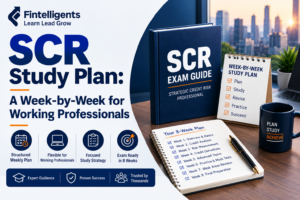
Most candidates need between two and four months of consistent study. Working professionals should plan for shorter, regular study sessions rather than long cramming blocks. Weekend batches work well for this reason.
Best Study Resources
Focus your preparation around these core resources:
- The official GARP SCR curriculum and learning objectives
- Full-length practice exams to build exam-day stamina
- Case study practice, since the exam includes applied scenarios
- A structured live class if you prefer guided learning over self-study
Enrolling with an experienced training provider can shorten your learning curve. A good instructor breaks down dense climate science topics into practical, exam-focused lessons.
SCR Certification Career Path in Singapore
An SCR credential opens multiple career tracks. Your starting point depends on your current experience and background.
Entry-Level Roles
Fresh graduates and early-career professionals typically start in these positions:
- ESG Analyst
- Sustainability Reporting Associate
- Junior Climate Risk Analyst
- ESG Research Assistant
These roles focus on data collection, report drafting, and supporting senior team members with disclosures.
Mid-Level Roles
Professionals with a few years of finance or risk experience move into roles like:
- Climate Risk Analyst
- ESG Consultant
- Sustainability Risk Manager
- Green Finance Associate
At this stage, you handle scenario analysis, client advisory work, and internal risk reporting independently.
Senior Roles
Experienced professionals with SCR certification can reach leadership positions such as:
- Head of Sustainability
- Chief Climate Risk Officer
- ESG Strategy Director
- Senior Green Finance Advisor
These roles combine technical climate expertise with strategic decision-making authority.
SCR Salary in Singapore
Salary depends heavily on experience, industry, and company size. The figures below reflect general market patterns for ESG and climate risk roles in Singapore. Treat them as indicative ranges, not fixed numbers, and always verify current figures on job portals before negotiating.
Average Salary by Experience Level
- Entry-level ESG and climate risk roles: roughly SGD 4,000 to 6,000 per month
- Mid-level roles with three to six years of experience: roughly SGD 7,000 to 12,000 per month
- Senior and leadership roles: roughly SGD 15,000 and above per month
Bonuses and other benefits can add significantly to these base figures, especially at large banks and asset managers.
Salary Comparison: SCR vs Other Certifications
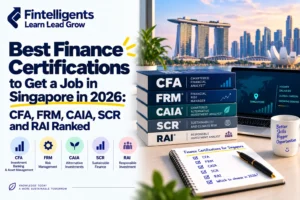
SCR complements rather than replaces certifications like CFA or FRM. Many professionals pair SCR with FRM to combine traditional risk management with climate expertise. This combination often commands stronger compensation than either certification alone.
Professionals who successfully pivot from generic risk roles into ESG-focused positions frequently report meaningful salary increases within two to three years of certification.
Top Companies Hiring SCR Certified Professionals
Global and regional employers increasingly list SCR as a preferred qualification. Companies known to value SCR-certified talent include:
- Major global banks with Singapore operations
- Big Four consulting and audit firms
- Asset management firms with ESG mandates
- Energy and industrial companies managing transition risk
- Insurance firms assessing climate-related exposure
Singapore’s status as a financial hub means many of these employers maintain a strong regional presence here.
Skills You Gain With SCR Certification
SCR training builds a specific, applied skill set. Certified professionals typically develop strength in:
- Interpreting climate science for business impact
- Conducting climate scenario analysis and stress tests
- Applying disclosure standards like TCFD and ISSB
- Assessing physical and transition risk exposure
- Advising on net-zero and transition strategy
- Communicating climate risk to non-technical stakeholders
These skills apply across banking, insurance, consulting, and corporate sustainability functions.
SCR vs Other Sustainability Certifications
Several credentials compete in the sustainability space. Here is how SCR compares.
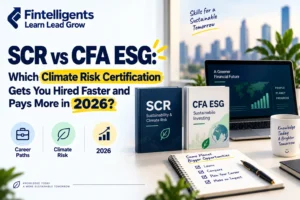
SCR focuses specifically on climate risk and its financial implications. It sits closer to risk management than general ESG reporting. Broader ESG certifications often cover governance and social factors in more depth, with less technical risk modelling.
For finance professionals, SCR offers a sharper, more technical angle. For sustainability generalists, a broader ESG credential might fit better. Many professionals eventually pursue both to cover different parts of the sustainability landscape.
Is SCR Certification Worth It in Singapore?
For most finance professionals, yes. Singapore’s regulatory push around climate risk creates steady, structural demand. SCR gives you a credential that maps directly onto that demand.
The certification suits you especially well if you:
- Already work in finance, risk, or audit
- Want to move into ESG or climate-focused roles
- Need a credential with no strict eligibility barriers
- Plan to work across Asia Pacific markets, not just Singapore
If your role has no connection to finance, risk, or corporate strategy, a broader sustainability course might serve you better than SCR.
Conclusion
SCR Certification gives Singapore-based finance professionals a clear, practical route into climate risk and ESG careers. The exam is rigorous but accessible, with no strict eligibility barriers. Combined with Singapore’s strong regulatory push around climate disclosure, SCR-certified professionals sit in a strong position for both entry-level roles and long-term career growth.
If you’re ready to start, review the official GARP syllabus, build a realistic study plan, and consider a structured prep course to stay on track.
FAQs
SCR Certification is a credential from GARP that validates knowledge of sustainability and climate risk management, including ESG frameworks and regulatory disclosure standards.
Yes. Singapore’s financial sector, guided by MAS climate risk requirements, actively recognises and values the SCR credential.
No. GARP does not require any minimum work experience or specific degree to register for the SCR exam.
As of 2026, the standard exam fee is around USD 575 for first-time candidates, with taxes added based on your location. Fees vary by registration window, so check GARP’s official fee schedule.
Most candidates need two to four months of consistent study, depending on their finance background and available study time.
Common roles include ESG Analyst, Climate Risk Analyst, Sustainability Risk Manager, and, at senior levels, Head of Sustainability or Chief Climate Risk Officer.
Entry-level roles typically start around SGD 4,000 to 6,000 per month, mid-level roles range from SGD 7,000 to 12,000, and senior roles can exceed SGD 15,000 per month, excluding bonuses.
It depends on your goals. FRM builds broad risk management skills, while SCR focuses on climate risk. Many professionals pursue both for a stronger, combined profile.