Blog
FRM Full Form: What Does FRM Stand For in Finance?

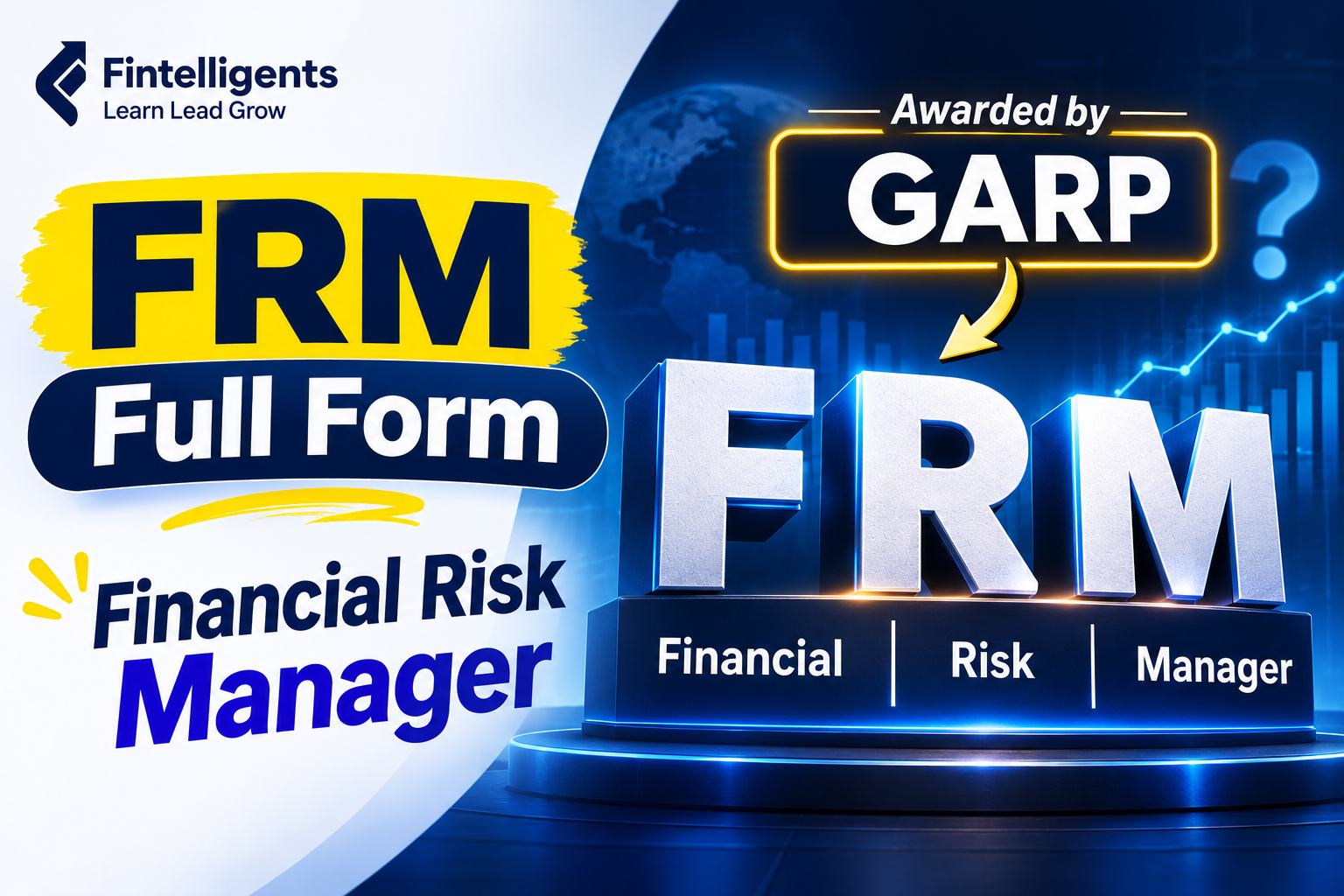
FRM stands for Financial Risk Manager. It is a professional certification awarded by the Global Association of Risk Professionals (GARP) to people who work in, or want to build a career in, financial risk management. FRM is a certification, not a university degree, and you earn it by passing two exams and documenting two years of relevant full-time work experience.
If you searched for the FRM full form because a colleague, a job post or a coaching ad mentioned it, this guide covers what the letters mean, what the credential involves and whether it fits your career. It also covers something many guides skip: where to start if you are reading this in November 2026.
Planning to complete your FRM Certification?
What is the full form of FRM?
FRM Financial Risk Manager. It is a global certification from GARP for finance professionals who measure, monitor and manage risks such as market risk, credit risk, operational risk and liquidity risk. It is earned by passing FRM Part I and Part II and showing two years of relevant full-time experience.
What does FRM stand for in finance?
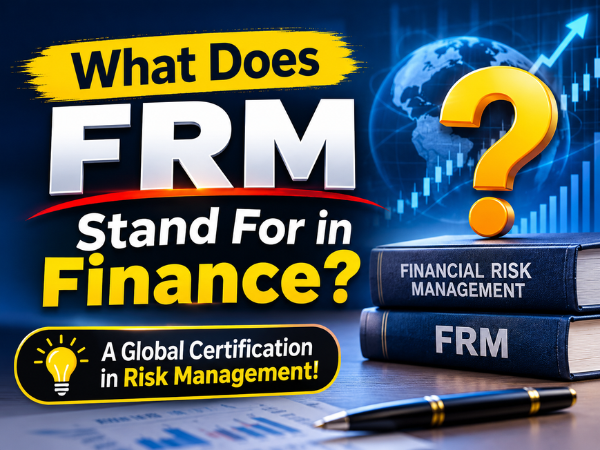
The three words each point to something specific:
- Financial: the risks in question come from money, markets, lending and financial products, not from general business or workplace safety.
- Risk: the chance that an outcome differs from what was expected, usually a loss. The FRM syllabus treats risk as something to be measured and priced, not only avoided.
- Manager: the person who identifies, measures and controls that exposure. In practice the credential is held by analysts, quants, auditors and consultants as well as managers.
FRM is also the abbreviation used for the exam, the programme and the designation after your name. The “FRM course full form” and “FRM exam full form” are therefore the same thing: Financial Risk Manager.
What is the meaning of FRM in banking?
Banks lend money, trade securities and hold customer deposits, so almost every function carries risk. In a banking context, FRM refers to the qualification a risk professional holds, not a job title in itself. Typical areas where FRM-trained people work include:
- Credit risk: judging whether borrowers will repay, and how much capital to hold against loans.
- Market risk: measuring how falls in prices, interest rates or currencies affect trading and investment books.
- Operational risk: failures of people, processes, systems or external events.
- Liquidity and treasury risk: making sure the bank can meet its obligations when funding conditions tighten.
These four areas map closely to the topics in the FRM Part II exam. For a role-by-role view, see our guide to FRM jobs in India.
What is the full form of FRM in risk management?
In risk management, FRM still means Financial Risk Manager. The difference is emphasis. Here the credential signals that you can use the standard toolkit of the profession: value-at-risk style measurement, stress testing, credit and market risk models, and the regulatory frameworks that shape bank capital. It is not an Indian qualification, and it is not regulated by any Indian body. It is a global credential, recognised by employers in banking, asset management, insurance and consulting.
Who awards the FRM, and why does that matter?
GARP, the Global Association of Risk Professionals, is a not-for-profit membership association for risk managers. It sets the FRM curriculum, runs the exams and decides whether your work experience qualifies. GARP says the curriculum is reviewed and revised every year by its FRM Advisory Committee, which includes practitioners from banks, asset managers and universities.
That annual review has a practical effect. Notes or videos from two or three years ago may cover topics that have since been reorganised, so check any study material against GARP’s current learning objectives.
Weighing FRM against your other options? Our FRM certification guide for India walks through the route step by step, and a fintelligents counsellor can help you choose between FRM, CFA, CAIA or a risk-focused alternative based on your background.
How do you earn the FRM designation?
GARP sets out four steps:
- Register and schedule an exam for a specific window by creating a GARP account and paying the fees.
- Prepare using GARP’s official study materials, practice exams, or an approved preparation provider.
- Pass Part I and Part II. Part II must be passed within four years of passing Part I.
- Submit two years of relevant full-time work experience within 10 years of sitting Part II. The experience can be gained before or after the exams.
The order matters because many candidates assume the work experience must come first. It does not, but without it you hold exam results rather than the full designation.
The two exams build on each other: Part I covers tools and foundations, and Part II applies them to specific risk areas. For a deeper walkthrough, read our beginner’s guide to what FRM is and the comparison of FRM Part 1 vs Part 2.
Who is FRM for?
FRM suits candidates who want a career in risk, not general finance. It tends to fit:
- Fresh graduates in commerce, economics, engineering, maths or statistics who want to enter banking risk or analytics roles. GARP does not set a degree requirement for registering, so you can start Part I while studying.
- Working bankers and analysts moving from operations, audit or credit into a dedicated risk function.
- Professionals abroad in markets such as the US, UK, Hong Kong, Canada and Singapore, who want a credential recognised across borders. Our FRM certification in UAE guide gives a Gulf-specific view.
It fits less well if your goal is equity research or portfolio management, where the CFA charter is usually the closer match. Our overview of the top finance certifications for 2026 compares the options side by side.
Which countries have the most FRM candidates?
FRM is taken worldwide, but a small group of markets dominates. In the candidate data used for this article, China, India and the United States hold the top three places for new, repeat and total Part I candidates, followed by Hong Kong, Canada and the United Kingdom.
| Rank | Countries P1 | Countries P1 | Countries P1 |
| 1 | China | China | China |
| 2 | India | India | India |
| 3 | USA | USA | USA |
| 4 | Hong Kong | Hong Kong | Hong Kong |
| 5 | Canada | Canada | Canada |
| 6 | United Kingdom | United Kingdom | United Kingdom |
| 7 | PRK (confirm country) | PRK (confirm country) | PRK (confirm country) |
| 8 | South Africa | Singapore | Singapore |
| 9 | Singapore | South Africa | Netherlands |
| 10 | France | Netherlands | South Africa |
GARP lists its fees in US dollars and runs computer-based exams, so the route to certification is the same wherever you live. What differs is which exam locations and dates are available to you, which GARP confirms when you schedule.
How hard is the FRM, and how long does it take?
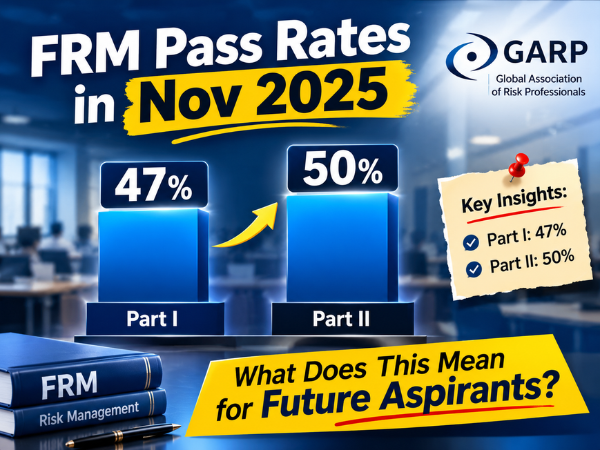
GARP publishes pass rates. For the November 2025 exam window, the Part I pass rate was 47% and the Part II pass rate was 50%. GARP also says candidates spend about 240 hours studying on average, with survey answers ranging from under 100 to over 400 hours. Both figures depend on background and are for planning, not a promise about your result.
Where to start if you are reading this in November 2026
Registration for the November 2026 window (Part I on 14 to 20 November, Part II on 21 to 25 November) closed on 30 September, and GARP does not run a late registration for it. GARP states that early registration for the May 2027 exams opens on 1 December. If you begin preparing now, you will have several months before that sitting. Confirm the exact 2027 dates and fees on GARP’s website once they are published, because they are subject to change.
Comparison tables
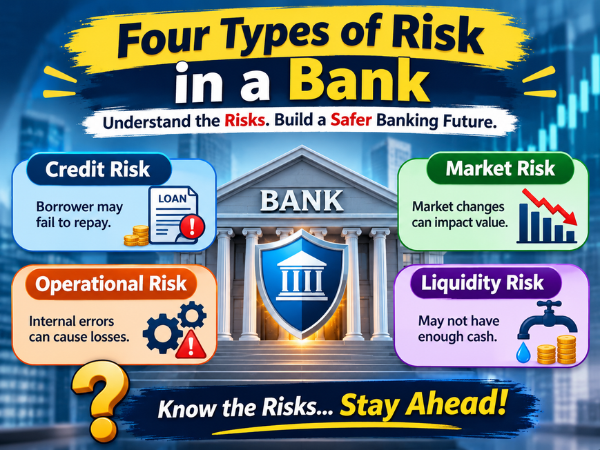
Table 1. FRM at a glance
| Detail | FRM |
| Full form | Financial Risk Manager |
| Awarded by | Global Association of Risk Professionals (GARP) |
| Type | Professional certification, not a degree |
| Exams | Part I and Part II, computer-based, multiple choice |
| Exam windows | May, August and November each year |
| Registration requirement | No degree or work experience requirement stated for Part I registration (confirm on GARP FAQ) |
| Time limit between parts | Part II within four years of passing Part I |
| Work experience for the designation | Two years of relevant full-time work, submitted within 10 years of sitting Part II |
| Average study time (GARP) | About 240 hours |
Table 2. FRM Part I vs Part II
| Part I | Part II | |
| Questions | 100, equally weighted | 80, equally weighted |
| Duration | 4 hours | 4 hours |
| Topics | Foundations of Risk Management; Quantitative Analysis; Financial Markets and Products; Valuation and Risk Models | Market Risk; Credit Risk; Operational Risk and Resilience; Liquidity and Treasury Risk; Risk Management and Investment Management; Current Issues in Financial Markets |
| Pass rate, Nov 2025 | 47% | 50% |
| Nature | Tools and foundations | Applying tools to specific risk areas |
The “Nature” row is our editorial summary of the topic lists, not a GARP statement.
Table 3. FRM cost in US dollars
| Fee | Amount (USD) | Note |
| Enrollment, one time | 400 | Paid with first Part I registration (GARP) |
| Exam fee per part, standard registration | 800 | Listed on GARP’s fees page for the November 2026 window |
| Exam fee per part, early registration | 600 | Reported by several prep providers; verify on GARP’s fees page for 2027 |
| Both parts, standard | 2,000 | 400 + 800 + 800, our arithmetic |
| Both parts, early | 1,600 | 400 + 600 + 600, our arithmetic |
Fees are charged in USD and may change. The INR cost depends on the exchange rate on the day of payment. Prep-provider pages quote different INR conversions, so convert at the live rate when you publish or leave it as a USD-only table.
Table 4. FRM vs CFA vs CAIA, direction of the career
| FRM | CFA | CAIA | |
| Awarded by | GARP | CFA Institute | CAIA Association |
| Core focus | Measuring and managing financial risk | Investment analysis and portfolio management | Alternative investments (hedge funds, private equity, real assets) |
| Typical fit | Risk analyst, credit or market risk, treasury, model validation | Research analyst, portfolio manager, wealth roles | Alternatives and institutional investing roles |
This table is deliberately qualitative. Add exam counts, fees and experience rules for CFA and CAIA only after checking each body’s current website, since those were not verified for this draft.
Frequently asked questions
FRM stands for Financial Risk Manager. It is a professional certification offered by GARP, the Global Association of Risk Professionals. The name is also used for the two-part exam and for the designation holders place after their names once they pass both exams and have their work experience approved.
In finance, FRM stands for Financial Risk Manager. It is a certification, not a university degree. You do not enrol in a college programme. You register with GARP, pass two exams and document two years of relevant full-time work experience before the designation is granted.
In banking, FRM refers to the credential held by people who assess and control risk, such as credit, market, operational and liquidity risk. It shows that a professional has been tested on how those risks are measured and managed. It is a qualification, not a specific job title, so FRM holders work under many different role names.
In risk management the full form is the same: Financial Risk Manager. The credential covers the standard risk-management toolkit, including risk measurement, valuation models, credit and market risk, and operational resilience. GARP reviews and revises the curriculum every year, so the exact topics can shift between exam cycles.
GARP’s published steps ask for two years of relevant full-time work experience to earn the designation, not to sit the exams. The experience must be submitted within 10 years of sitting Part II and can be gained before or after you pass. Check GARP’s FAQ for the current registration conditions before you pay.
There are two computer-based, multiple-choice exams. Part I has 100 equally weighted questions and Part II has 80. Each gives you four hours. GARP offers both parts in May, August and November, and you must pass Part II within four years of passing Part I.
GARP reported pass rates of 47% for Part I and 50% for Part II in November 2025. It says candidates spend about 240 hours on average, with survey responses ranging from under 100 to over 400. Your own background in finance and statistics will move that number up or down.
No. Registration for the November 2026 window closed on 30 September 2026 and GARP does not offer late registration for it. GARP says early registration for the May 2027 exams opens on 1 December. Confirm the 2027 dates and fees on GARP’s website once they are published.
In the candidate data used for this article, China, India and the United States rank first, second and third, followed by Hong Kong, Canada and the United Kingdom. Singapore, South Africa and the Netherlands also appear in the top ten. Rankings shift between exam cycles, so check GARP’s latest published figures.
Conclusion: what the FRM full form tells you about the career
The FRM full form, Financial Risk Manager, describes a specific career path: measuring and managing the risks that banks, funds and insurers take. It is a global credential from GARP, built from two exams and two years of relevant work, and it rewards candidates who are comfortable with both quantitative tools and real-world judgement.
If that sounds like your direction, the practical next step is to choose a target window. For most readers in November 2026 that means May 2027, with early registration opening on 1 December. Use the weeks before then to read the official curriculum, test your comfort with the quantitative topics and decide whether to study alone or with structured guidance, for example by comparing FRM coaching options in India.