
Blog
FRM Certification in India 2026: Fees, Eligibility, Career


Risk management is now a core function in every bank and financial firm. Regulators demand stronger controls. Markets move faster. Firms need people who can measure and manage risk.
That demand is why FRM Certification in India is gaining attention. The Financial Risk Manager (FRM) credential is one of the most respected risk qualifications in the world. It suits students, analysts, bankers, and auditors.
This guide covers everything you need to know. You will learn the fees, eligibility, exam pattern, syllabus, and study plan. You will also see the career options and salary trends.
What Is FRM Certification in India?
The FRM is a professional credential for risk managers. It is awarded by the Global Association of Risk Professionals (GARP). Indian candidates take the same exam as candidates worldwide.
About GARP
GARP is a global body for risk professionals. It sets the FRM curriculum and runs the exams. It also updates the syllabus as markets change.
What the FRM Covers
The FRM tests your skill in identifying and measuring risk. It covers market risk, credit risk, operational risk, and liquidity risk. It also includes valuation models and investment risk.
Why the Credential Is Global

The FRM has no country-specific rules. A pass in Mumbai carries the same weight as a pass in London. This makes it useful for Indian professionals who want global roles.
Why Choose FRM Certification in India in 2026?
Many finance certifications compete for your time. The FRM stands out for a few clear reasons. Let us look at each one.
Rising Demand for Risk Professionals
Indian banks, NBFCs, and fintech firms face tougher compliance rules. As a result, they hire more risk analysts. The FRM signals that you already know the core concepts.
Global Recognition
Global banks and consulting firms know the FRM well. Therefore, the credential helps when you apply abroad. It also helps in Indian offices of global firms.
Flexible and Focused
The FRM has two exam parts. Each part is a single multiple-choice test. In addition, you can take the exams in several windows each year. This suits working professionals.
Strong Career Signal
Employers use certifications to filter applicants. Passing both parts shows discipline and technical depth. Consequently, your profile stands out in a crowded market.
FRM Eligibility Criteria
Many people worry about eligibility first. The good news is that the entry barrier is low. However, the full certification has a work rule.
Education Requirements to Register
GARP does not set a strict degree requirement to sit the exam. You can register while still in college. Even so, a finance, commerce, engineering, or maths background helps a lot.
Work Experience Requirement
You need professional experience to earn the FRM designation. GARP asks for two years of relevant work experience. It can be in risk, finance, or a related field. You can complete this before or after passing the exams.
Time Limit After Passing
After you pass Part II, you must submit your work experience within a set period. Check GARP’s current rules before you plan. Rules can change from year to year.
Who Should Apply?
The FRM suits several types of candidates.
Students and Fresh Graduates

You can start Part I early. Passing it builds a strong résumé. Also, it gives you an edge in campus and off-campus hiring.
Working Professionals
Bankers, auditors, and analysts benefit the most. The FRM helps you move into risk roles. It also helps you get promoted within your current firm.
Career Switchers
Professionals from IT, accounting, or operations can also join. The syllabus is heavy on numbers. So, a quantitative mindset is useful.
FRM Certification Fees in India 2026
Fees are a key concern for Indian candidates. GARP charges in US dollars. Therefore, the rupee cost changes with the exchange rate.
GARP Fee Structure
The cost has two parts. The first is a one-time enrollment fee. The second is an exam fee for each part.
Fee Type Amount (USD) Notes
Enrollment fee 400 One-time, paid with first Part I registration Exam fee (early registration) 600 Per part
Exam fee (standard registration) 800 Per part
Deferral fee 250 To move to the next window
Please verify these numbers on GARP’s official fee page before you pay. Fees and deadlines can change.
Total Cost in Dollars
Early registration for both parts costs about USD 1,600. That is USD 400 plus USD 600 plus USD 600. Standard registration for both parts costs about USD 2,000.
Approximate Cost in Rupees
A first-time Part I candidate pays roughly USD 1,000 with early registration. That is around ₹84,000 at recent exchange rates. Standard registration brings it near ₹1,00,000.
The full two-part journey with early registration is about ₹1.3 lakh to ₹1.4 lakh. Exchange rates and taxes can move this figure.
Exam fees are not the only expense. Plan for these items as well.
Study Material and Coaching
Prep providers offer notes, question banks, and video lectures. Prices vary widely. Some candidates self-study with official books and save money.
GST and Forex Charges
Indian candidates may pay GST on the fee. Your bank may also add currency conversion charges. Keep a small buffer in your budget.
Calculator and Test Centre Costs
GARP allows only approved calculators. Buy one early and practise with it. Travel to a test centre may add a small cost too.
Optional Membership
GARP membership is optional for sitting the exam. Your first year is complimentary with a first time registration. Renewal costs extra after that.
Smart Ways to Save Money
• Register in the early window to save USD 200 per part.
• Avoid deferrals by planning your study time well.
• Use free official learning resources first.
• Share study groups to split the cost of question banks.
• Pay the fee on a card with low forex charges.
FRM Exam Pattern and Syllabus
The FRM has two parts. You must pass both to earn the credential. Each part is a computer based multiple-choice exam.
FRM Part I Overview
Part I builds the foundation. It has about 100 questions. The time limit is four hours. Here is the typical topic split for Part I.
Part I Topic Approx. Weight
Foundations of Risk Management 20%
Quantitative Analysis 20%
Financial Markets and Products 30%
Valuation and Risk Models 30%
Foundations of Risk Management
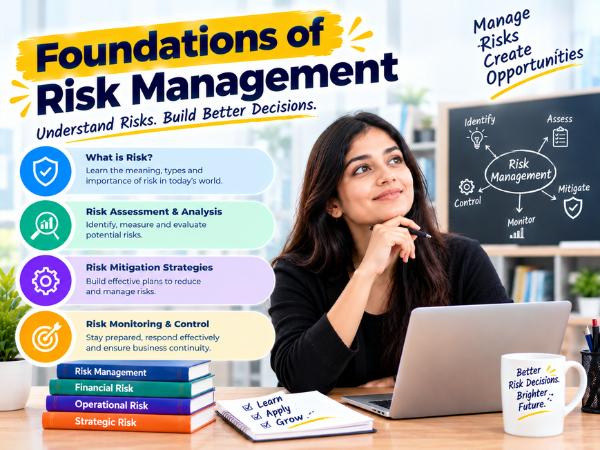
This topic explains risk governance and risk culture. It also covers enterprise risk and risk failures from the past. Expect many concept-based questions.
Quantitative Analysis
This section uses probability, statistics, and regression. You must interpret data, not just compute it. Many candidates find this section tough at first.
Financial Markets and Products
You learn about bonds, futures, options, and swaps. The section also covers how markets and exchanges work. It carries a large weight, so study it well.
Valuation and Risk Models
This part covers Value at Risk and pricing models. It also includes fixed income valuation. Practise numerical problems here.
FRM Part II Overview
Part II goes deeper into applied risk topics. It has about 80 questions. The time limit is again four hours.
| Part II Topic Market Risk Measurement and Management Credit Risk Measurement and Management Operational Risk and Resilience Liquidity and Treasury Risk Risk Management and Investment Management 15%Current Issues in Financial Markets | Approx. Weight 20% 20% 20% 15% 10% |
Weights can shift when GARP updates the curriculum. Always confirm them in the current official guide.
Market and Credit Risk
These two topics form a big share of Part II. They test how you measure exposure and losses. You will also study credit models and ratings.
Operational and Liquidity Risk
Operational risk covers failures in people, systems, and processes. Liquidity risk covers funding stress and cash shortfalls. Both areas gained importance after recent banking events.
Current Issues
This section tracks new themes such as climate risk and digital finance. Therefore, read the latest curriculum updates before your exam.
Exam Windows and Format
GARP offers the exams in multiple windows each year. You choose your window and test centre. India has several test centres, so travel is usually manageable.
Both parts use the same style of questions. There is no negative marking in most cases, but confirm this in the candidate handbook. So, attempt every question.
How to Register for the FRM Exam
Registration is simple. Still, deadlines matter. Follow these steps.
Step-by-Step Registration
1. Create a GARP account on the official website.
2. Choose your exam part and exam window.
3. Pay the enrollment fee and exam fee.
4. Schedule your test centre and time slot.
5. Save your confirmation and admit details.
Registration Versus Scheduling
Paying the fee does not book your seat. You must schedule your centre and date as a second step. Do it early, because popular centres fill up fast.
Deferral Rules
Life can disrupt your plan. GARP allows a deferral to a later window for a fee. You must apply before the stated deadline. Exam fees are generally not refunded.
How to Prepare for the FRM Exam
Good preparation beats last-minute cramming. The syllabus is wide. So, you need a clear plan. How Many Hours Do You Need?
Most candidates study 250 to 300 hours per part. Your background changes this number. A finance graduate may need fewer hours than an engineer.
A Sample 16-Week Study Plan
Weeks Focus
1–8 Read the core topics and make short notes
9–12 Solve topic-wise practice questions
13–14 Revise weak areas and formulas
15–16 Take full-length mock exams
Tips for Part I
Build Your Quant Base First
Start with statistics and probability. These ideas appear in later chapters. A weak base slows everything else.
Learn Formulas with Meaning
Do not just memorise formulas. Understand what each one measures. Exam questions often test the concept behind the number.
Tips for Part II
Focus on Application
Part II asks how you would apply a concept. Study case-style questions. Also read about real risk events.
Stay Updated
Read the latest GARP curriculum notes. Then link them to current market news. This helps with the current issues section.
Common Mistakes to Avoid
• Starting too late and rushing the syllabus.
• Skipping mock exams until the last week.
• Ignoring the calculator until exam day.
• Studying only your strong topics.
• Missing early registration deadlines.
FRM Pass Rate and Difficulty Level
The FRM is challenging. Pass rates have historically stayed below 60 percent for many windows. They change from one exam window to another.
Why Candidates Struggle
Three reasons stand out. The syllabus is broad, the questions are tricky, and time is tight. Also, many candidates underestimate the quant sections.
How to Improve Your Chances
Practise timed questions every week. Review every wrong answer. Then note why you made the mistake. This habit lifts your score steadily.
FRM Career Scope in India
Career scope is the main reason to pursue the FRM. Let us look at roles, employers, pay, and growth.
Popular Job Roles
The credential opens doors to several roles.
• Risk Analyst
• Credit Risk Manager
• Market Risk Analyst
• Operational Risk Manager
• Quantitative Analyst
• Compliance and Regulatory Risk Officer
• Investment Risk Consultant
Who Hires FRM Holders?
Many employers value risk skills.
Banks and NBFCs
Banks need risk teams for credit, market, and operational risk. NBFCs also need strong credit risk skills. Regulation keeps these teams growing.
Consulting and Audit Firms
Consulting firms advise clients on risk frameworks. Audit firms need risk specialists for advisory work. The FRM adds credibility in both.
Asset Managers and Insurers
Fund houses track portfolio risk daily. Insurers assess underwriting and investment risk. Both hire risk talent.
Fintech and Global Capability Centres
Fintech firms need risk models for lending and payments. Global capability centres in India support risk work for parent firms. Consequently, these are growing employers.
Salary Expectations
Salary depends on your employer, city, and experience. Entry-level risk roles often start in the range of ₹5 lakh to ₹10 lakh per year. With experience, mid-level professionals can earn much more. Senior risk leaders at large firms can earn well above that.
Treat these numbers as broad indicators only. Check current job listings for your target city and role.
Career Growth Path
A typical path looks like this.
1. Risk Analyst in the first two to three years.
2. Senior Analyst or Associate in the next few years.
3. Risk Manager after building deep expertise.
4. Head of Risk or Chief Risk Officer in the long run.
FRM vs CFA: Which Is Better?
Many finance students compare these two credentials. Both are respected. However, they serve different goals.
| Factor Main focus Exam levels Best for Typical duration Shorter Career type | FRM | CFA Investment management 3 levels Equity research, portfolio roles Longer Risk analyst, risk manager Analyst, portfolio manager |
| Risk management | ||
| 2 parts | ||
| Risk and treasury roles | ||
How to Choose
Choose the FRM if you want a career in risk. Choose the CFA if you want research or portfolio work. Some professionals complete both over time.
Is FRM Worth It in India?
For most risk-focused candidates, yes. The cost is moderate compared with the career upside. The credential also travels well across borders.
However, it is not a magic ticket. You still need practical skills and good communication. Employers also value internships and hands-on experience.
Consider the FRM if these points describe you.
• You enjoy numbers and problem-solving.
• You want a career in banking or risk.
• You can commit several months to study.
• You want a globally recognised credential.
Frequently Asked Questions
It is the Financial Risk Manager credential awarded by GARP. Indian candidates take the same exams as global candidates. It proves your skill in financial risk management.
GARP charges a one-time USD 400 enrollment fee. Each exam part costs USD 600 with early registration or USD 800 with standard registration. In rupees, a first-time Part I candidate pays roughly ₹84,000 to ₹1,00,000, plus taxes.
There is no strict degree rule to sit the exam. Students and professionals can both register. To earn the designation, you need relevant work experience as per GARP rules.
GARP allows repeat attempts, but there are policies on how long you have to finish. Check the current candidate handbook for exact limits. You do not pay the enrollment fee again on a retake.
The exam is moderately to highly difficult. The syllabus is wide, and the questions test concepts. With steady study and mock tests, most disciplined candidates can pass.
Many candidates finish in 12 to 18 months. This includes both parts and preparation time. Fast track candidates can finish sooner.
Yes, a fresher can start with Part I. You can build the work experience later. Early progress helps your résumé.
Salaries vary by role, employer, and city. Entry-level risk roles often start between ₹5 lakh and ₹10 lakh per year. Pay grows with experience and expertise.
Neither is better in every case. The FRM suits risk careers. The CFA suits investment and research careers.
Yes. GARP offers computer-based exams at test centres in India. You choose your window and centre while scheduling.
Conclusion
FRM Certification in India offers a strong path into risk careers. The fees are clear, and the entry rules are flexible. In addition, the credential carries global weight.
Plan your budget early and pick an exam window. Then follow a steady study routine. With the right effort, the FRM can lift your finance career in 2026 and beyond.