Blog
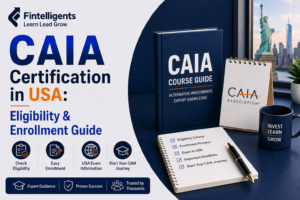
CAIA Certification in USA: Who Can Apply and What You Need

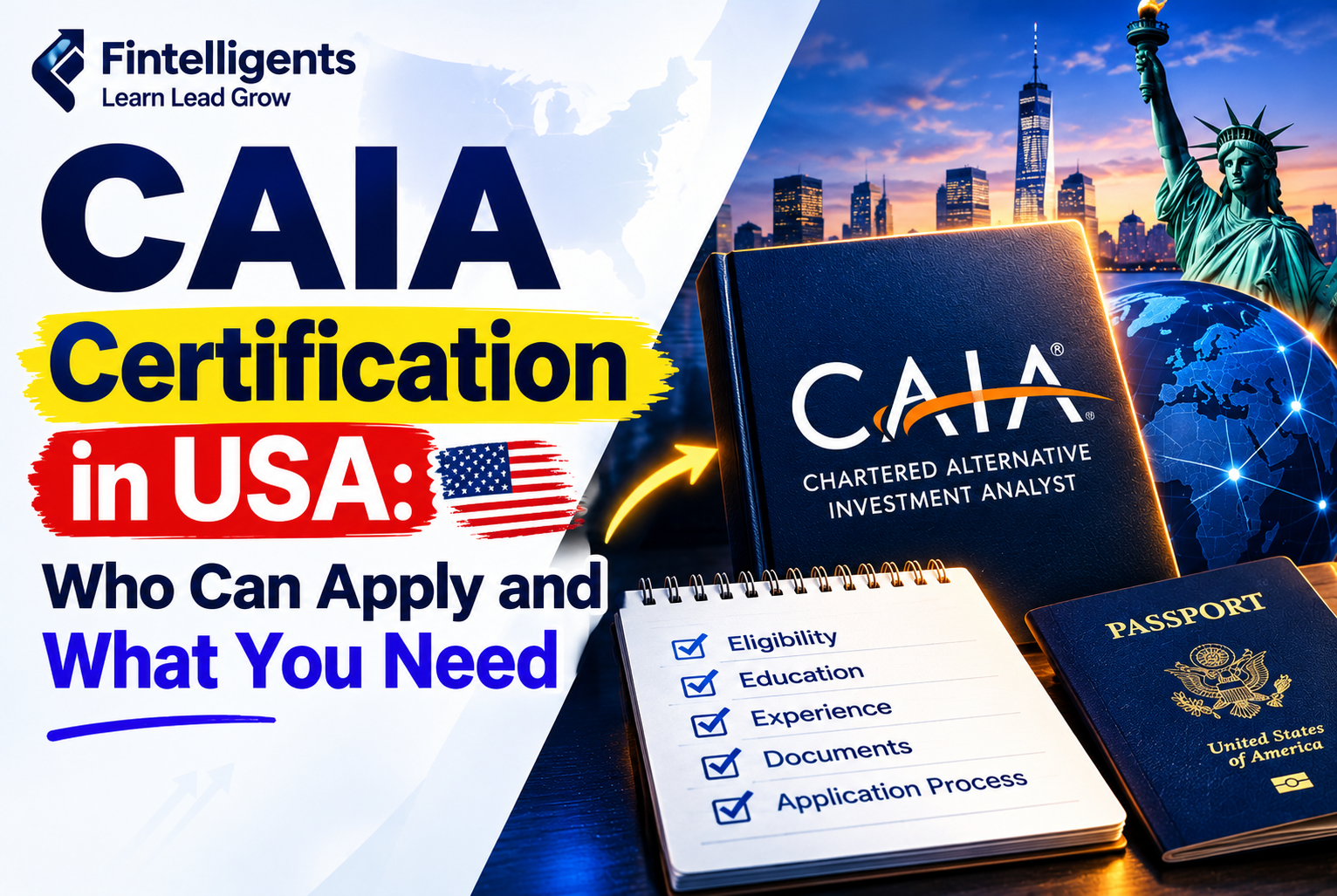
Almost anyone can apply for the CAIA certification in USA or anywhere else. The CAIA Association lists no hard requirements to register for the exam, so you don’t need a specific degree, work experience or US residency to sit for Level I. The real gate comes later: to receive the CAIA Charter, you must pass Level II and also meet an experience rule.
That split between exam eligibility and charter eligibility is where most students get confused, so this guide keeps the two apart. You’ll also find current fees, the March 2027 deadlines and a step-by-step enrolment path.
Who Can Apply for CAIA?
Anyone can register for the CAIA exam. The CAIA Association states there are no hard requirements, though it recommends a grasp of the financial services industry, corporate finance and statistics coursework, English proficiency, valid ID and residency outside OFAC-restricted countries. The charter needs Level II plus a degree with one year of experience, or four years of experience.
What Is the CAIA Charter?
The CAIA (Chartered Alternative Investment Analyst) Charter is a professional designation from the CAIA Association, a global body for alternative investment education. It covers private equity, private debt, real assets, hedge funds and digital assets, and then moves into portfolio construction and risk at Level II. The Association reports more than 14,000 members across 100+ countries and 35 chapters.
Is CAIA Different in the USA?
No. There is no separate US version. The same programme, the same two levels and the same rules apply worldwide, and exams are held at test centres around the world. Online proctored exams are available only by exception, with an approved accommodation.
So “CAIA in the USA” really means two things: a US-based candidate follows the standard global process, and an India-based candidate can earn the same charter, which US employers can read on a CV.
One limit is worth knowing. CAIA is a professional credential. It is not a licence to practise in the US and it does not grant work authorisation.
Who Can Apply for the CAIA Exam?
Degree: Do You Need One?
No degree is formally required to register. CAIA does recommend finance foundations, since Level I assumes you can handle basic corporate finance and statistics.
Some older prep-provider pages still say a bachelor’s degree, or final-year status, is needed before enrolling. The CAIA Association’s own candidate page is the authority, and it says there are no hard requirements. Check the live page before publishing.
Can Freshers and Students Apply?
Yes. A final-year undergraduate or a fresh graduate can register for Level I and Level II. The catch is the charter: you can pass both exams as a fresher but you can’t receive the charter until the experience requirement is met. Many students use that waiting period to build experience, and they keep their exam results.
Is There an Age Limit?
The CAIA Association’s candidate requirements list no age limit.
Is Work Experience Required?
Not to take the exams. Experience matters only at the charter stage, covered next.
Exam Eligibility vs Charter Eligibility
| Exam eligibility (becoming a candidate) | Charter eligibility (becoming a member) | |
| Degree | Not required | Bachelor’s degree or equivalent, with 1 year of experience |
| Experience | Not required | 1 year (with degree) or 4 years (without) in regulatory, banking, financial or related fields |
| Exams | Register and sit for the exam | Pass Level I and Level II |
| Other | Valid ID; residency outside OFAC-restricted countries | Two professional references; CAIA Association membership fee |
| Who decides | CAIA Association registration | CAIA Association membership review |
CAIA Charter Eligibility: What Happens After Level II
After Level II, you apply for membership. The CAIA Association’s membership requirements for Full Membership are:
- Passing the Level II exam, and
- Either a bachelor’s degree (or equivalent) plus one year of professional experience in alternative investment analysis or a regulatory, banking, financial or related field, or four years of such experience, or being a CFA charterholder in good standing.
If you pass Level II but don’t yet meet the experience rule, the Association offers Affiliate Membership. Affiliates get most member benefits but can’t use the CAIA marks or receive the charter until they qualify for Full Membership. Only after joining can you add the CAIA designation to your profiles.
What counts as experience? The Association describes it as professional work in a related field. If your role is borderline, ask the Association before you rely on it. Annual membership has been reported at US$350 for one year or US$650 for two. Confirm on caia.org.
Not sure whether your current job counts towards the charter experience rule? Our counsellors can map your profile against the requirements. Explore the CAIA programme at Fintelligents
CFA Charter holders: The Stackable Credential Route
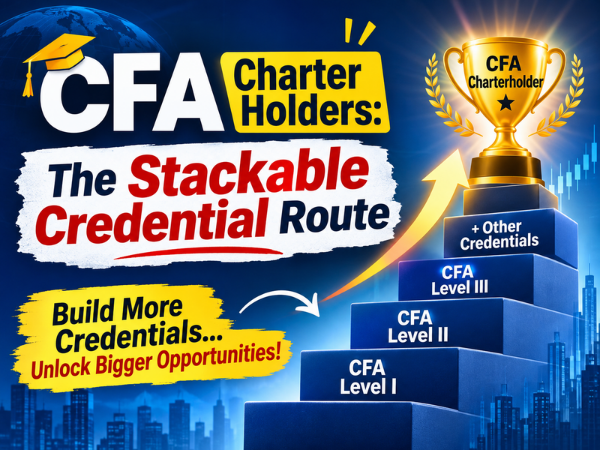
If you hold the CFA charter, you may skip Level I. The CAIA Association lets CFA charter holders in good standing, with a CFA digital badge that CAIA can verify, enter the programme as Level II candidates. Prep providers add that you must have no previous CAIA exam history, so check the Stackable Credential Eligibility Policy.
You do not need a CFA to pursue CAIA. The two are separate credentials, and most people take CAIA directly.
CAIA Enrollment: Fees and Deadlines
CAIA enrolment happens in two steps: a one-time enrolment fee, then exam registration. Figures below are from the CAIA Association (US dollars, March 2027 cycle). Indian GST applies to Indian candidates, and Canadian GST applies where relevant.
| Item | Early registration | Standard registration |
| One-time enrolment fee (non-refundable) | US$400 | US$400 |
| Level I exam registration (digital curriculum included) | US$995 | US$1,395 |
| Level II exam registration | US$995 | US$1,395 |
| Retake (either level) | US$795 | US$795 |
| Level I only, first time | US$1,395 | US$1,795 |
| Both levels, first time | US$2,390 | US$3,190 |
The totals are simple sums of the official figures. They exclude GST, membership fees and any third-party study materials.
Key dates for March 2027:
| Event | Date |
| Registration opens | 12 October 2026 |
| Early registration deadline | 7 December 2026 |
| Registration closes | 1 February 2027 |
| Level I exam window | 1–12 March 2027 |
| Level II exam window | 15–26 March 2027 |
The September 2027 cycle opens on 12 April 2027 (early deadline 7 June, close 2 August), with Level I from 30 August and Level II from 16 September.
Registration is tied to one exam session, and deferments aren’t allowed. A refund of the exam fee is possible only within 14 days of purchase.
How Long Does CAIA Take, and Can You Do It While Working?
The Association recommends at least 200 hours of study per level, and says the average candidate finishes in 12 to 18 months. Exams run twice a year, so finishing within a year is possible.
Working professionals do take it alongside a full-time job. Because the two levels are held in separate windows, you can plan around your busiest work months. A rough guide: 200 hours across about four months is around 12 hours a week.
Is CAIA Worth It, and How Does It Compare With CFA?

The honest answer depends on your career target. CAIA is specialised: its content centres on alternatives such as private equity, hedge funds, real assets, private debt and digital assets, followed by risk and portfolio construction. CFA is broader, covering investment management in general. That makes CAIA a strong fit for roles close to alternatives, such as asset management, wealth management, institutional investing and manager due diligence, but it doesn’t guarantee a job, salary or placement.
Which is “harder” depends on your background. CAIA has fewer topics but denser ones, and candidates with day-to-day exposure to alternatives often find them familiar.
For a deeper look at costs and payoff, read our CAIA career value and ROI guide. Indian readers can also see our CAIA course in India overview.
How to Apply for CAIA Step by Step
- Check the basics. Valid ID and residency in a non-restricted country.
- Create a CAIA account on the CAIA Association website and choose your exam window.
- Register early to save US$400 on the exam fee (early deadline 7 December 2026 for March 2027).
- Schedule your exam at a test centre.
- Study from the official curriculum. The digital curriculum is included in your registration.
- Pass Level I, then Level II in separate exam windows.
- Apply for membership with two professional references once you meet the experience rule.
Need a study plan or a place to start? Browse our complete CAIA exam guides.
Conclusion
For the CAIA certification in USA, the rule is simple. Anyone can enrol and sit the exams, but only candidates with a degree plus one year of experience, or four years of experience, receive the charter. Early registration for March 2027 closes on 7 December 2026, so decide soon if you want the lower fee.
If you’re weighing whether CAIA fits your profile, our counsellors can walk through eligibility, fees and a study plan with you.
Book a free demo class or speak with a CAIA course counsellor at Fintelligents. Enquire About Course Fees and Eligibility
FAQs
Anyone can register for the CAIA exam, including US residents and international candidates, as long as they have valid ID and live outside OFAC-restricted countries. There are no hard degree or experience requirements to sit the exam. To receive the charter, you must pass both levels and meet the CAIA Association’s experience rule.
To take the exam, the CAIA Association lists no hard requirements, only recommendations such as finance and statistics knowledge. To earn the charter, you need a bachelor’s degree with one year of professional experience, or four years of experience, plus two professional references and Association membership.
No. The CAIA Association’s candidate page says there are no hard requirements to register. A degree helps with the charter, though. Without one, you need four years of relevant professional experience before you can become a full member.
Yes. Freshers and final-year students can register and sit both exams. They can’t receive the charter until they meet the experience requirement, but they can join as Affiliate Members after passing Level II, according to CAIA’s membership policy.
The CAIA Association’s candidate requirements list no age limit. What matters is valid ID, residency in a non-restricted country and, for the charter, your education and experience.
No. CFA is not a prerequisite. CFA charter holders in good standing can skip Level I through the stackable credential route, but everyone else starts at Level I.
For the March 2027 cycle, a first-time candidate pays a US$400 enrolment fee plus US$995 per exam level if registered early, or US$1,395 if registered at the standard rate. Both levels cost about US$2,390 early, before GST and membership fees.
The CAIA Association recommends at least 200 study hours per level and says the average candidate takes 12 to 18 months. Exams run in March and September, so completing both levels within a year is possible.
Yes, many candidates do. Plan roughly 200 hours per level, which is about 12 hours a week over four months. The separate exam windows let you schedule around busy work periods.
Exam eligibility lets you register and sit Levels I and II, and it has no hard requirements. Charter eligibility needs Level II plus a degree with one year of experience, or four years of experience, and Association membership.