Blog
How to Clear SCR Certification: A Complete Study and Exam Guide

Passing a professional exam on your first try saves time, money, and stress. This is exactly why so many candidates search for a clear path on how to clear SCR Certification instead of guessing their way through preparation.
The Sustainability and Climate Risk (SCR) Certificate from GARP has become one of the most sought-after credentials for finance and risk professionals. It tests real analytical skill, not just memorized definitions. That structure trips up unprepared candidates.
In this guide, you will learn what the SCR exam actually covers, how it is structured, and what a realistic study plan looks like. You will also learn the mistakes that cause candidates to fail and the habits that help them pass with confidence.
What Is SCR Certification?
SCR Certification stands for the Sustainability and Climate Risk Certificate. The Global Association of Risk Professionals, known as GARP, created it.
The certificate focuses on one specific problem. It teaches professionals how climate change and sustainability issues affect financial decisions and risk models.
This is different from a general ESG course. SCR Certification is built for people who need to measure, manage, and report on climate-related financial risk. That includes risk managers, analysts, auditors, and consultants.
The credential is globally recognized. Employers in banking, insurance, asset management, and corporate risk teams increasingly look for it on a resume.
SCR Exam Study Planner 2026
How SCR Different From Other Certifications
Candidates often compare SCR Certification with the CFA Institute’s Sustainable Investing Certificate. The two serve different goals.
The CFA credential leans toward investment analysis and portfolio decisions. SCR Certification leans toward risk measurement, governance, and financial reporting related to climate change.
Neither certificate replaces traditional credentials like the CFA or FRM. Instead, SCR Certification adds a specialized layer on top of an existing finance or risk background.
Why Professionals Pursue SCR Certification
Climate-related financial regulation is expanding every year. Regulators, investors, and boards now expect firms to disclose and manage climate risk properly.
This shift has created real demand for professionals who understand both finance and sustainability. SCR Certification signals that expertise in a way a general degree cannot.
Common reasons professionals choose to pursue it include:
- Building a specialized skill set that complements the CFA or FRM
- Meeting new job requirements tied to ESG and climate risk roles
- Preparing for internal transfers into sustainability or risk teams
- Standing out in a competitive job market for climate finance roles
Many candidates are not new to finance. They already work in risk, audit, or investment roles and want a credential that proves climate expertise specifically.
Who Typically Enrolls
The candidate pool is more varied than most finance certifications. It includes risk managers at banks, sustainability analysts at asset managers, auditors, consultants, and even university students planning a career in climate finance.
Job titles connected to SCR Certification often include climate risk analyst, ESG risk manager, sustainability consultant, and credit risk officer with an ESG focus. The common thread is a need to connect climate issues to financial outcomes.
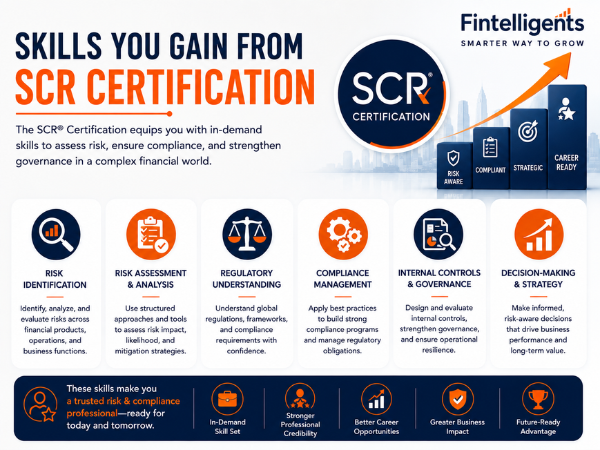
Skills You Gain From SCR Certification
Beyond the certificate itself, the preparation process builds specific, job-ready skills. This is one reason employers value it beyond a simple line on a resume.
By the end of the program, candidates typically improve their ability to:
- Identify physical and transition climate risks within a portfolio or business
- Read and interpret climate scenario analysis and stress test results
- Understand how disclosure frameworks like TCFD shape corporate reporting
- Connect carbon accounting basics to financial statements and risk models
- Evaluate green and sustainable finance products with a risk-aware lens
These are not abstract skills. Risk teams, audit functions, and ESG reporting groups use them directly in day-to-day work. This applied focus is what separates SCR Certification from a general awareness-level ESG course.
Understanding the SCR Exam Format
You cannot build an effective study plan without understanding the exam structure first. The SCR exam has a fixed, predictable format.
The exam includes 80 multiple-choice questions. One of these is a multi-part case study rather than a single standalone question.
Candidates get four hours to complete the exam. It is computer-based and delivered through Pearson VUE, either at a physical test center or through online proctoring.
Scoring and Question Weighting
Every question carries equal weight. A basic recall question is worth the same as a complex analytical one.
There is no negative marking on the SCR exam. This means guessing on a difficult question is always better than leaving it blank.
The exam is pass/fail. GARP does not publish a detailed numeric score breakdown for candidates the way some exams do.
Tools Allowed During the Exam
A digital, on-screen calculator is built into the testing platform. You do not need to bring your own calculator.
In-person candidates receive an erasable note board and pen for rough work. Online candidates use a digital whiteboard instead. Scratch paper is not permitted in either format.
Exam Windows and Scheduling
GARP runs the SCR exam twice a year, typically in April and October. Seats are booked on a first-come, first-served basis, so early registration matters.
If you miss your scheduled window or do not pass, GARP allows registration for one of the next two exam windows at a reduced retake price. Always confirm the current fee and deadlines on GARP’s official site, since pricing details can change.
Question Styles You Will Encounter
The 80 questions are not all built the same way. Recognizing the style of a question helps you approach it faster.
Broadly, candidates encounter four styles: straightforward recall questions, applied “what would happen if” scenario questions, questions that ask you to identify the best risk response, and the multi-part case study that ties several concepts together.
Recall questions move quickly. Scenario and case study questions need more careful reading, since a single missed detail can change the correct answer.
Breaks and Testing Conditions
In-person candidates may request a break, but it requires proctor approval and no extra time is added to the clock. Online proctored candidates generally do not get breaks during the session.
Planning your pacing around this detail matters. Treat the four hours as a single continuous block rather than assuming you can pause freely.
SCR Certification Syllabus: What You Need to Study
The SCR curriculum is broad by design. It blends climate science, financial risk theory, and regulatory frameworks into one course of study.
While the exact structure and module count can shift slightly between exam years, the core subject areas remain consistent. Expect to study the following themes.
Climate Science Foundations
This section covers the basic science behind climate change. Topics include greenhouse gas emissions, global warming trends, and climate scenarios.
You do not need a science background to understand this material. The exam tests applied understanding, not laboratory-level detail.
Climate Risk in Financial Markets
This is the core of the exam. It covers how physical risks, like extreme weather, and transition risks, like policy change, affect asset values and financial institutions.
Expect questions on how banks, insurers, and asset managers assess and price these risks.
Sustainable Finance and Green Investment
This section covers how capital flows toward sustainability focused projects and instruments. It includes green bonds, sustainable investment products, and related market mechanisms.
Frameworks, Disclosure, and Reporting
Candidates should understand major disclosure frameworks. The Task Force on Climate-related Financial Disclosures (TCFD) is a common reference point.
You should also understand basic carbon accounting concepts, including how organizations measure and report greenhouse gas emissions.
Risk Management and Scenario Analysis
This section ties everything together. It focuses on how institutions build climate scenarios and stress test their portfolios against them.
Case study questions on the exam often draw from this area, since it requires applying multiple concepts at once.
Governance and Corporate Strategy
This area looks at how boards and senior leadership factor climate risk into strategy and oversight. It covers governance structures, board-level accountability, and how firms embed climate risk into existing risk committees.
Questions here often test whether you understand the difference between disclosure for compliance and disclosure that genuinely informs decision-making.
How the Curriculum Is Updated
GARP reviews and updates the SCR curriculum periodically to reflect new regulations, frameworks, and market developments. This means content from a prior year’s exam guide may not fully match the current syllabus.
Always study from the current official curriculum year rather than an older PDF or secondhand notes. This single habit prevents a common and avoidable source of exam surprises.
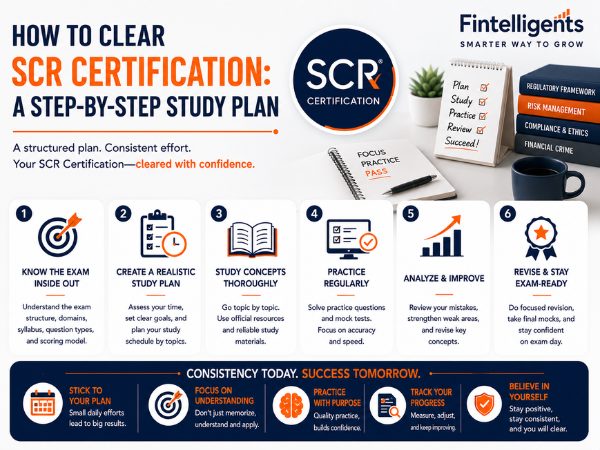
How to Clear SCR Certification: A Step-by-Step Study Plan
Most successful candidates study for roughly 100 to 150 hours. Spreading this across 8 to 12 weeks keeps the workload manageable alongside a full-time job.
Here is a study structure that works well for most working professionals.
Weeks 1 to 4: Build Conceptual Clarity
Start with the official GARP curriculum. Read through the climate science and sustainability foundation sections first.
Do not rush this phase. A weak foundation here makes the risk management material harder to understand later.
Set a simple weekly target, such as completing one major topic area per week. Take notes in your own words instead of copying text directly.
Weeks 5 to 8: Focus on Risk Frameworks and Case Studies
Move into climate risk management, disclosure frameworks, and scenario analysis. This is the most exam-relevant section.
Practice applying frameworks to short scenarios. Ask yourself simple questions, such as: “If I worked at a bank, how would this policy change affect my lending risk?”
This habit builds the applied thinking the exam actually tests.
Keep a running list of frameworks you find confusing, such as specific disclosure standards or scenario analysis methods. Revisit that list weekly instead of waiting until the final revision phase to address gaps.
Weeks 9 to 10: Revise and Take Mock Exams
Use the final two weeks mainly for practice, not new reading. Take full-length, timed mock exams under realistic conditions.
Review every wrong answer carefully. Sort your mistakes into categories, such as “concept gap” or “misread the question.”
This error log approach helps you fix repeated weaknesses instead of guessing what to review next.
Build a Simple Weekly Routine
Consistency matters more than long study marathons. Two focused hours a day is often more effective than one long session on weekends.
A simple weekly routine could include:
- Two weekday sessions on new material
- One weekend session on practice questions
- A short weekly review of flagged topics
Adjust this pace based on your own schedule and learning speed.
Recommended Study Resources
Stick to a small, focused set of resources instead of collecting scattered material from multiple sources. Scattered studying often wastes more time than it saves.
A reliable core toolkit includes:
- The official GARP SCR curriculum and learning platform
- The full-length practice exams included with registration
- A structured, chapter-wise study guide for daily reading targets
- Timed mock exams from a reputable provider for the final revision phase
Third-party mock exams are useful, but treat GARP’s own official practice exam as your primary benchmark. It reflects the actual question style most closely.
A Practical Example: Applying SCR Concepts
Reading definitions is different from applying them under exam conditions. A short example shows how SCR concepts connect in practice.
Imagine a regional bank with a large lending portfolio tied to coastal commercial properties. Rising sea levels and storm frequency represent a physical climate risk to those assets.
A risk officer trained in SCR concepts would ask several linked questions. How does this physical risk affect property values used as loan collateral? Does the bank’s current stress testing model account for climate scenarios? Should lending limits or insurance requirements change for this segment?
This kind of layered thinking, moving from a climate trend to a concrete financial and policy decision, is exactly what SCR exam case studies test. Memorizing that “physical risk” means weather-related damage is not enough. You need to trace it through to a business decision.
Practicing this kind of reasoning with real or hypothetical scenarios, not just flashcards, is one of the most effective ways to prepare for the applied portions of the exam.
Common Mistakes That Cause Candidates to Fail
Many candidates underestimate the SCR exam because it sounds like a general ESG course. That assumption often leads to weak preparation.
Here are mistakes that repeatedly show up among unsuccessful candidates.
- Treating it as a reading exam. The SCR exam rewards applied thinking, not memorized definitions.
- Skipping practice questions. Reading the curriculum alone does not train you for exam-style questions.
- Ignoring the case study format. The multi-part case study requires careful, sequential reading under time pressure.
- Cramming in the final week. Climate risk concepts connect to each other. Rushed review rarely builds real understanding.
- Not tracking weak areas. Candidates who repeat the same mistakes in mock exams usually repeat them on exam day too.
Avoiding these mistakes does more for your pass chances than any single study trick.
Balancing Preparation With a Full-Time Job
Most SCR candidates are working professionals, not full-time students. Fitting 100 to 150 hours of study around a demanding job is a real challenge, not a minor detail.
A few habits make this balance easier. Protect a fixed daily time slot, even if it is short, rather than relying on “whenever I have time.” Consistency beats occasional long sessions.
Tell a manager or colleague about your exam date if possible. Light accountability, even informal, helps you protect study time during busy work weeks.
Finally, treat commute time or short breaks as opportunities for light review, such as flashcards or short summary notes, rather than saving all study time for evenings.
Exam Day Tips to Improve Your Chances
Good preparation can still fall apart with poor exam-day strategy. A few habits make a real difference during the four-hour session.
Manage Your Time Deliberately
With 80 questions and four hours, you have roughly three minutes per question on average. Build in extra buffer time for the case study.
Complete a first pass through standalone questions at a steady pace. Flag anything that needs deeper thought, and return to it later.
Never Leave a Question Blank
Since there is no negative marking, a blank answer has zero value. A reasoned guess always has a better expected outcome.
If you are unsure, eliminate clearly wrong options first. This improves your odds even on a pure guess.
Read Case Study Questions Twice
Case study questions often contain small but important details. A rushed first read can cause you to miss a key condition in the scenario.
Read the full case study once for context. Then reread it while answering each related question.
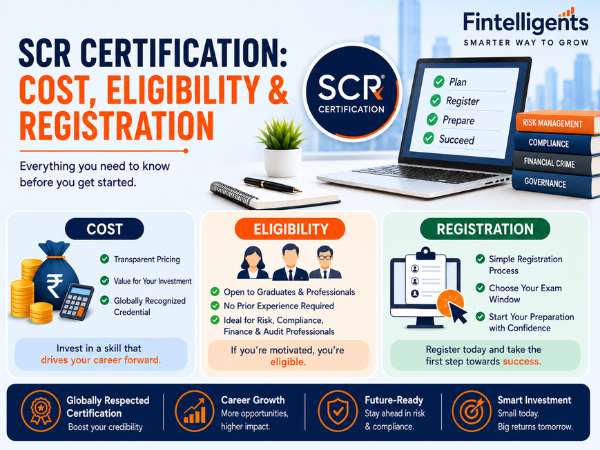
SCR Certification Cost, Eligibility, and Registration
Understanding the practical requirements helps you plan your budget and timeline properly.
Eligibility Requirements
GARP does not enforce strict formal prerequisites for the SCR exam the way some professional bodies do. It is open to a wide range of candidates.
This includes finance and risk professionals, sustainability practitioners, career changers, and university students. A basic understanding of finance or risk concepts is helpful, but not always mandatory.
Registration happens directly through GARP’s official platform. You choose an exam window, pay the applicable fee, and then select either an in-person Pearson VUE test center or online proctoring.
Registration also includes access to the digital GARP Learning platform, the current curriculum, and at least one full length practice exam.
Fees and Retake Policy
Exam fees vary depending on whether you register during the early or standard window, and pricing can change from year to year. Always check GARP’s official fees page for the exact current amount before budgeting.
If you do not pass or are unable to sit for your scheduled exam, GARP typically allows registration for one of the next two exam windows at a reduced retake price. Confirm the current retake fee and deadlines directly with GARP, since these details are updated periodically.
Ongoing Requirements After Passing
SCR Certificate holders are encouraged, though not strictly required, to complete continuing professional development (CPD) credits over a two-year cycle. This keeps your knowledge current as regulations and frameworks evolve.
SCR Certification vs Other Credentials
Candidates researching SCR Certification often weigh it against other well-known finance and risk credentials. A simple side-by-side view helps clarify where it fits.
| Credential | Core Focus | Best Suited For |
| SCR Certification (GARP) | Climate and sustainability risk in finance | Risk managers and ESG-focused finance roles |
| CFA Sustainable Investing Certificate | ESG factors in investment analysis | Portfolio managers and investment analysts |
| FRM (GARP) | Broad financial risk management | General risk management careers |
| CFA Program | Investment management and analysis | Investment and portfolio management careers |
None of these credentials fully replaces another. Many professionals pair SCR Certification with the FRM or CFA to combine broad risk or investment expertise with specialized climate risk knowledge.
Is SCR Certification Worth It?
This is a fair question, since the exam demands a real time investment. The answer depends on your career direction.
If your role touches risk management, ESG reporting, or sustainable finance in any way, the certificate can meaningfully strengthen your profile. It shows employers that your climate risk knowledge goes beyond general awareness.
If your work has little connection to risk, sustainability, or financial reporting, the return may be smaller relative to the study effort required.
Consider these factors before committing:
- Does your current or target role involve climate or sustainability risk?
- Are you already comfortable with core finance or risk concepts?
- Can you realistically commit 100 to 150 hours over two to three months?
If most answers point toward yes, SCR Certification is likely to be a strong career investment.
How Long Does the Whole Process Take?
From registration to receiving your certificate, most candidates complete the full journey in three to four months. This includes eight to twelve weeks of study plus a short administrative period after the exam for results processing.
If you fail on your first attempt, the retake process adds another exam cycle, typically another four to six months, depending on which window you choose next. This is one more reason a solid first-attempt study plan pays off.
Career Roles That Value This Credential
Job postings that mention SCR Certification, or accept it as a preferred qualification, tend to cluster around a few areas. These include climate risk analyst roles, ESG risk and compliance positions, sustainability-focused credit risk roles, and consulting positions tied to climate disclosure work.
Even when a job listing does not name the certificate directly, mentioning it on a resume signals a level of technical seriousness about climate risk that general ESG awareness training does not.
Frequently Asked Questions
Difficulty depends on your background. Candidates with existing risk, ESG, or finance experience often find the material easier to apply. The exam rewards applied thinking over memorization, so structured practice with mock exams matters more than passive reading.
Most candidates spend between 100 and 150 hours preparing, spread across 8 to 12 weeks. Working professionals often manage this with two focused study sessions on weekdays and one longer session on weekends.
The SCR exam has 80 multiple-choice questions, including one multi-part case study, completed in four hours. There is no negative marking, so every question should be answered, even with a reasoned guess.
No. The SCR exam does not deduct points for wrong answers. This means leaving a question blank has no advantage over making an educated guess based on eliminating clearly incorrect options.
No. SCR Certification is a specialized, complementary credential focused specifically on climate and sustainability risk. It does not replace broader finance or risk certifications like the CFA or FRM, but it adds specialized value alongside them.
Clearing SCR Certification comes down to understanding the exam format, building a structured study plan, and practicing with realistic mock exams. The material rewards applied thinking, so passive reading alone rarely leads to a pass.
Start early, follow a phased study plan, and track your mistakes so you stop repeating them. Pay close attention to case study questions, since they combine multiple concepts at once.
SCR Certification is not a shortcut credential. It requires genuine effort across roughly 100 to 150 study hours. For professionals working in risk, ESG, or sustainable finance, that investment often pays off through stronger job prospects and a credential that clearly signals climate risk expertise.
The core takeaway: prepare with structure, practice consistently, and treat the exam as a test of applied judgment, not memorized facts.